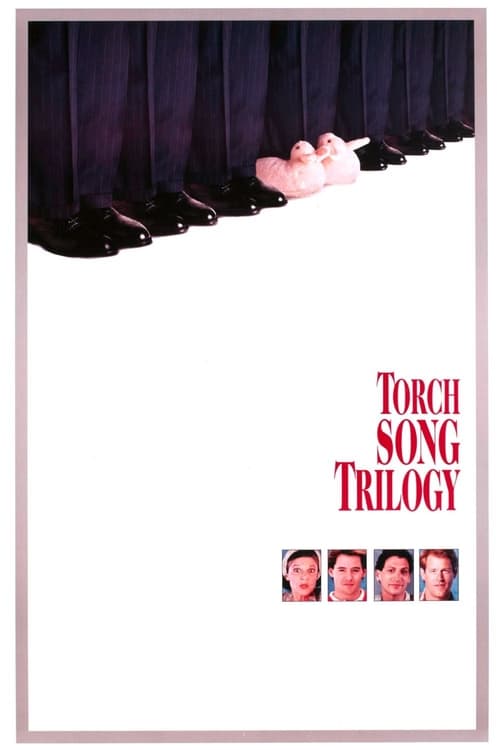
Torch Song Trilogy
Plot
Arnold Beckoff is looking for love and acceptance, but as a gay man working as a female impersonator in 1970s New York City, neither come easily. After a series of heartaches, Arnold believes he has found the love of his life in Alan, and the couple make plans to adopt. But when tragedy strikes, Arnold's life is shaken to its very core, leading to a confrontation with his overbearing mother, who has never approved of her son's lifestyle.
Get the Weekly Woke Watchlist
New and trending movies scored for woke bias, preachy messaging, and forced political themes — before you waste your evening.
No spam. One useful email per week.
Overall Series Review
Categorical Breakdown
The narrative's central conflict is predicated on the main character's immutable characteristics, specifically being gay and Jewish, in the context of a heteronormative and often intolerant society. The film’s tension comes from the struggle for the main character to be judged by the content of his soul (his desire for love and family) rather than his sexual identity. The story does not rely on race, intersectional hierarchy, or the vilification of whiteness, but identity is the paramount thematic concern that drives all plot points.
The movie demonstrates hostility toward a specific institution—the main character's own family unit—represented by his mother, who rejects his lifestyle and partners. The mother's traditional American-Jewish family values are shown as prejudiced and unforgiving. Arnold, however, does not reject the concept of institution itself; he actively tries to build his own stable, committed, family structure through monogamy and adoption, seeking to claim the protective benefits of 'home' for himself, rather than deconstruct the entire civilizational heritage.
Gender dynamics are not the focus of the narrative. The lead character is a male drag performer, which is a non-normative gender expression, but it is not used to emasculate men broadly or promote a 'Girl Boss' trope. The male characters display vulnerability, commitment, and protective masculinity (Alan is killed intervening in a gay-bashing incident). Motherhood, in the form of Ma Beckoff, is portrayed as a source of pain and intolerance, but the narrative ends with the lead embracing a *paternal* role through the celebrated act of adoption, which is anti-anti-natalism.
The narrative is completely centered on alternative sexualities, specifically gay and bisexual relationships. The film explicitly chronicles the pursuit of gay monogamous love, the formation of a gay nuclear family via the adoption of a gay son, and frames the opposition to this life (from family and society) as blatant bigotry. Sexual identity is the defining and most important trait for the main character and is the engine of the plot, placing it at the highest intensity level of the 'Queer Theory Lens.'
The conflict with the traditional family is primarily cultural and social, stemming from the mother's inability to reconcile her son's life with her own traditional religious and familial values. The film features no outright attack on Christianity or other religions, and the moral framework is clearly defined by a transcendent need for 'love and respect,' which serves as an objective moral law that the intolerant characters fail to uphold. The morality is not subjective; it is a clear demand for decency and familial acceptance.
Get the Weekly Woke Watchlist
New and trending movies scored for woke bias, preachy messaging, and forced political themes — before you waste your evening.
No spam. One useful email per week.