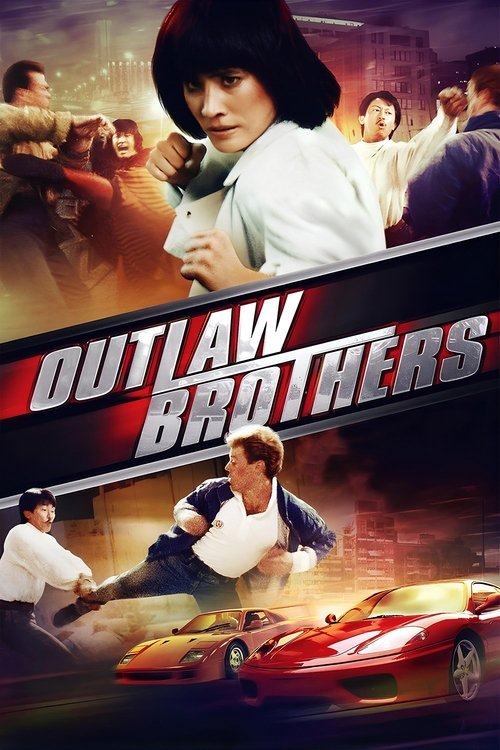
Outlaw Brothers
Plot
Frankie Chan and Max Mok are high-class car thieves whose sticky fingers get them in trouble with some gangsters, and then some really nasty gangsters. Tough policewoman Yukari Oshima wants to put the thieves behind bars, but realizes that by working together against the gangsters they can both benefit more.
Get the Weekly Woke Watchlist
New and trending movies scored for woke bias, preachy messaging, and forced political themes — before you waste your evening.
No spam. One useful email per week.
Overall Series Review
Categorical Breakdown
Characters succeed or fail based on their martial arts skill and criminal cunning, representing universal meritocracy. The casting is authentic to the Hong Kong setting. The main antagonists include Western actors, with some commentary noting 'westerners were the villains du jour,' which slightly raises the score from a perfect 1, but the conflict remains non-racialized in its core presentation.
The film is a Hong Kong production that focuses on local criminals and police. The storyline of car theft and drug smuggling critiques individual moral failings and illegal enterprises. There is no element of civilizational self-hatred, nor is the underlying Western framework of liberty or the nation-state structure explicitly attacked.
The main female lead is Inspector Tequila, a 'supercop' and 'Action Girl' celebrated for her physical competence and fight choreography, demonstrating skill-based empowerment. The primary villain is also a ruthless woman, Miego. The male protagonist seeks a traditional romantic relationship with the policewoman. The narrative features a male character exhibiting a protective 'Big Brother Instinct' toward his sister who is a victim of domestic abuse, valorizing protective masculinity. Some peripheral female characters are reportedly objectified, preventing a perfect 1 score.
The narrative is centered on a standard heterosexual romance subplot, car theft, and a crime drama. There is no presence of sexual ideology, deconstruction of the nuclear family, or gender theory lecturing in the plot or themes.
The movie is a secular action-comedy-crime thriller. The central conflict is purely grounded in criminal activity and law enforcement, with no mention of religious institutions, figures, or debates on objective versus subjective morality.
Get the Weekly Woke Watchlist
New and trending movies scored for woke bias, preachy messaging, and forced political themes — before you waste your evening.
No spam. One useful email per week.