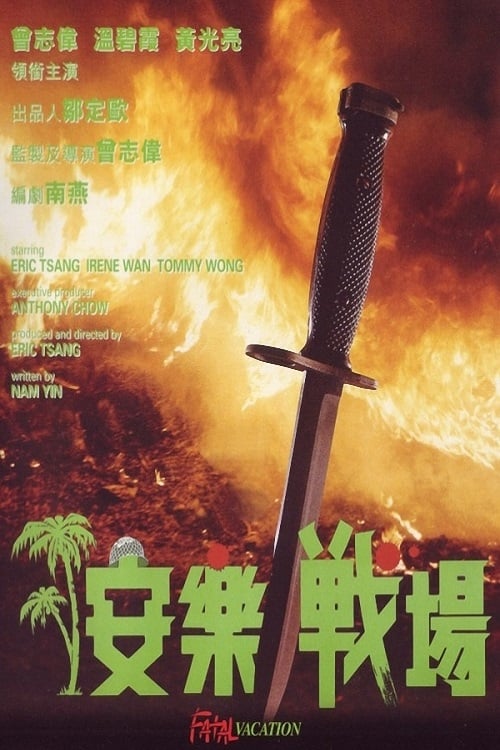
Fatal Vacation
Plot
A pleasent trip to the Phillipines is turned into tragedy when the tour bus is kidnapped by a group of rebels that want to exchange the prisoners for the Rebel Leader's brother...
Get the Weekly Woke Watchlist
New and trending movies scored for woke bias, preachy messaging, and forced political themes — before you waste your evening.
No spam. One useful email per week.
Overall Series Review
Categorical Breakdown
The movie does not utilize an intersectional lens or focus on vilifying 'whiteness.' The conflict is between Hong Kong Chinese tourists and Filipino Communist rebels. The narrative emphasizes a universal meritocracy where flawed characters, including a woman dismissed as a 'whore,' must demonstrate courage and merit to survive. The film has been criticized for xenophobic and racist clichés in its portrayal of the Filipino antagonists.
The film’s central political anxiety is local to Hong Kong, expressing a fearful view of the future (the 1997 Handover) rather than an explicit self-hatred of a civilization. It satirizes the hypocritical middle-class and crass media of Hong Kong, but the narrative ends with the Hong Kong tourists uniting to defend themselves against a foreign, existential threat, which is contrary to civilizational self-hatred. It depicts the Communist rebels as psychotic animals, rejecting the 'Noble Savage' trope.
This film completely lacks 'Girl Boss' or 'Mary Sue' tropes. Female characters are primarily victims of violence, rape, and exploitation, or they are elderly. The male characters are not systemically emasculated; instead, they are forced to step up and exhibit protective, masculine characteristics to lead the group’s violent breakout. The focus is on exploitation and survival, not anti-natalism or career fulfillment.
The film does not contain any observable elements of the 'queer theory lens.' Sexual identity is not centered, and there is no discussion or lecturing on gender ideology, transitioning, or deconstructing the nuclear family. The focus remains on heterosexual dynamics within the group and the violence of the conflict.
The film does not contain hostility toward religion or Christianity. The primary antagonists are 'rabid Communist terrorists,' and their cruelty (murder, rape) is presented as an objective evil. The core narrative is built around a clear, transcendent moral law: the right to self-preservation against monstrous evil, which is the antithesis of moral relativism.
Get the Weekly Woke Watchlist
New and trending movies scored for woke bias, preachy messaging, and forced political themes — before you waste your evening.
No spam. One useful email per week.