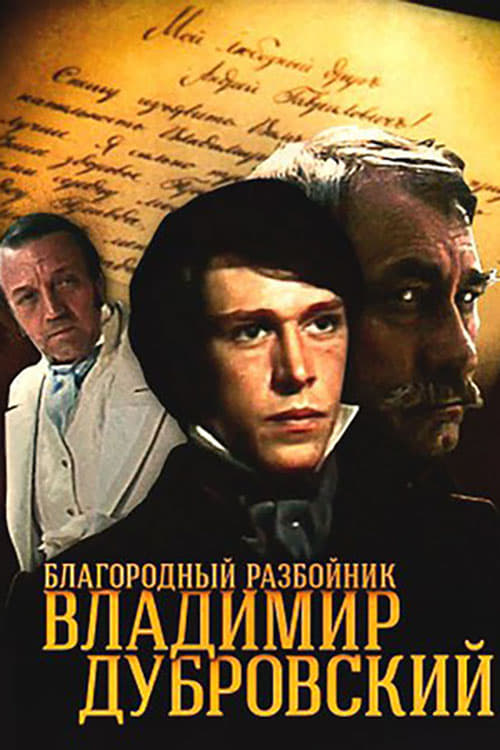
Vladimir Dubrovsky: The Noble Robber
Plot
A young master, Vladimir Dubrovsky, comes to the estate to visit his father, who has long been in litigation with his neighbor, the despotic landowner Troekurov. Having seriously insulted Dubrovsky Sr., Troekurov tries to go to peace, but the proud old man is adamant.
Get the Weekly Woke Watchlist
New and trending movies scored for woke bias, preachy messaging, and forced political themes — before you waste your evening.
No spam. One useful email per week.
Overall Series Review
Categorical Breakdown
The narrative is driven entirely by class and wealth dynamics: a poor nobleman is unjustly ruined by a rich aristocrat. Characters are judged by their actions and nobility of character (Vladimir is a 'noble' robber; Troekurov is a 'despotic' master). The struggle is based on merit/justice versus corruption, not on race or intersectional hierarchy. The casting is historically authentic to 19th-century Russia.
The story critiques a specific, corrupt institution—the aristocratic/feudal judicial system—and the actions of an oppressive individual (Troekurov). Vladimir’s mission is to defend his family, its honor, and his estate, which is an expression of loyalty to his home and heritage. The ancestor/home culture is not fundamentally demonized; rather, the hero acts to uphold a higher, noble standard for his civilization against a corrupting force.
The core female character, Masha, is portrayed as a victim of her father's 'full parental authority,' which is historically accurate for the 19th-century aristocratic setting. She is not a 'Girl Boss' or 'Mary Sue' but a figure constrained by tradition, whose romantic fate is tied to the central male conflict. The narrative is framed around traditional family structures and a complementary romantic pairing, with no evidence of anti-natal or emasculating messaging.
The plot focuses exclusively on the traditional male-female pairing between Vladimir and Masha. The narrative is concerned with a class feud, revenge, and romantic love. There is no presence of alternative sexualities, gender ideology, or deconstruction of the nuclear family. The structure is entirely normative.
The protagonist becomes a 'noble robber' to seek justice against a corrupt legal system and a powerful oppressor. This pursuit of justice suggests an appeal to a higher moral standard and objective truth, not moral relativism. The core conflict is not framed as an attack on religion (Christianity) but on human corruption and injustice. The theme of ethics and revenge is central, suggesting a transcendent moral order.
Get the Weekly Woke Watchlist
New and trending movies scored for woke bias, preachy messaging, and forced political themes — before you waste your evening.
No spam. One useful email per week.