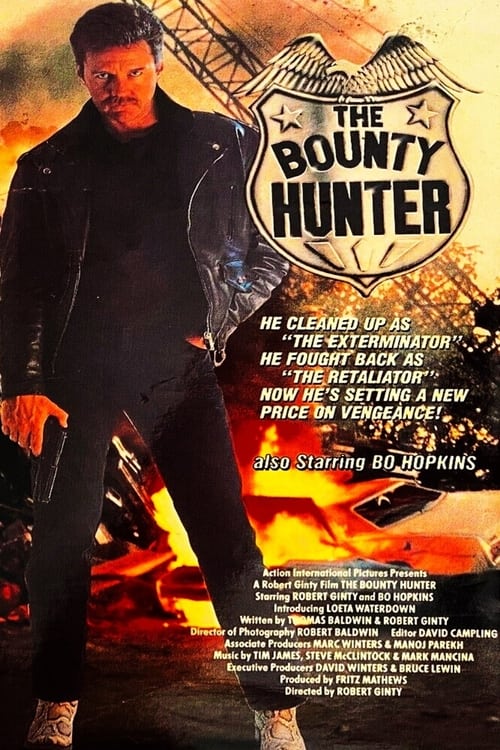
The Bounty Hunter
Plot
An ex-cop turned bounty hunter shows up in a small town looking for a man who's jumped bail. However, the real reason he's there is to avenge his old friend, an Indian who lived in the area and was murdered by the local sheriff, who is trying to get the Indians to sell their land cheaply so an oil company can move in and take over the land, which they believe sits on top of large reserves of oil.
Get the Weekly Woke Watchlist
New and trending movies scored for woke bias, preachy messaging, and forced political themes — before you waste your evening.
No spam. One useful email per week.
Overall Series Review
Categorical Breakdown
The entire plot revolves around systemic oppression, where the corrupt local white sheriff and his deputies extort and murder the Native American (Choctaw) community to seize their ancestral land for an oil company. Native characters are presented as morally pure victims and freedom fighters standing up for their rights and communal integrity. The white villains are depicted with negative stereotypes, such as being 'fat and uncouth' and drinking heavily, while the Native community is portrayed as unproblematic and honorable. The protagonist is a white male, but he functions purely as an external ally intervening to solve the oppression problem for the marginalized group.
The core institutions of the Western setting—local law enforcement, local government, and corporate capitalism (the oil company)—are framed as fundamentally corrupt and evil. These elements of Western civilization are depicted as the predatory force preying upon the virtuous, ancestral culture of the Native American community. The narrative places moral superiority squarely with the marginalized, non-Western group's values (communal integrity, ancestral land rights) over the avarice of the dominant culture. The film also contrasts the villains' use of Confederate flags with the Native protest displaying the American flag, symbolically vilifying a specific segment of 'Western' local culture.
Marion Foot, the sister of the murdered Native American man, is an active co-protagonist who teams up with the bounty hunter to avenge her brother and fight the corrupt system. She is a strong, capable female character actively involved in the action and the fight for justice, fitting a 'Girl Boss' archetype for her era and genre. The film has no apparent focus on family dynamics, marriage, or motherhood, leaning its female representation entirely into the sphere of action and justice seeking.
There are no discernible themes, characters, or dialogue that center on alternative sexualities, gender ideology, or the deconstruction of the nuclear family. The film focuses strictly on the action plot, racial tensions, and economic corruption.
The conflict of the movie is purely secular, focusing on land rights, corporate greed, and revenge. There are no elements of religion or religious characters presented as either good or evil, nor is there any dialogue or subtext that advocates for moral relativism over a transcendent moral law. The movie operates on a simple, objective moral framework of good vs. evil based on action and consequence.
Get the Weekly Woke Watchlist
New and trending movies scored for woke bias, preachy messaging, and forced political themes — before you waste your evening.
No spam. One useful email per week.