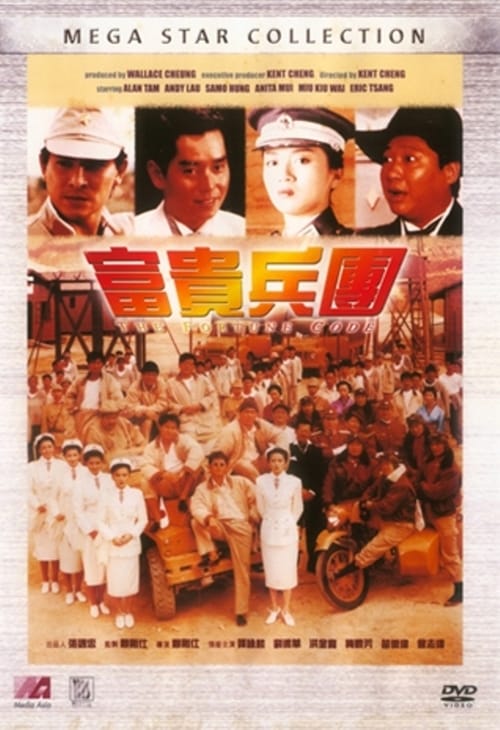
The Fortune Code
Plot
Set in China during the Japanese occupation. A young man breaks out of a POW camp to marry his sweetheart, but finds she is now a spy for the resistance, code-named "Number 3". With the help of "Number 2" he returns to the camp to find "Fortune", an agent who possesses the pass-code to a Swiss bank account with $500 billion intended for the Chinese army.
Get the Weekly Woke Watchlist
New and trending movies scored for woke bias, preachy messaging, and forced political themes — before you waste your evening.
No spam. One useful email per week.
Overall Series Review
Categorical Breakdown
The movie focuses on a nationalistic conflict between Chinese resistance fighters and Japanese occupiers. Character merit is defined by courage and skill as spies or combatants in the war effort. Casting is historically authentic to the setting of 1942 China.
The central plot is an act of profound national loyalty, where Chinese protagonists risk their lives to secure funds to defend their country against a foreign invader. The narrative celebrates Chinese heritage and institutions against a foreign threat.
The female character, Jone, is a highly capable spy and master of disguise who actively participates in the dangerous mission. The male protagonist's initial motivation is to marry her, placing a traditional pairing at the story's origin. Males are depicted as competent resistance fighters, not bumbling idiots.
The core narrative involves a traditional male-female pairing and a wartime mission. There is no evidence of alternative sexualities being centered, deconstruction of the nuclear family, or discussion of gender ideology.
The mission is secular, focusing on obtaining a financial code for the war effort. The cause itself is portrayed as an objective moral good—national liberation. There is no critique of traditional religion or embrace of moral relativism.
Get the Weekly Woke Watchlist
New and trending movies scored for woke bias, preachy messaging, and forced political themes — before you waste your evening.
No spam. One useful email per week.