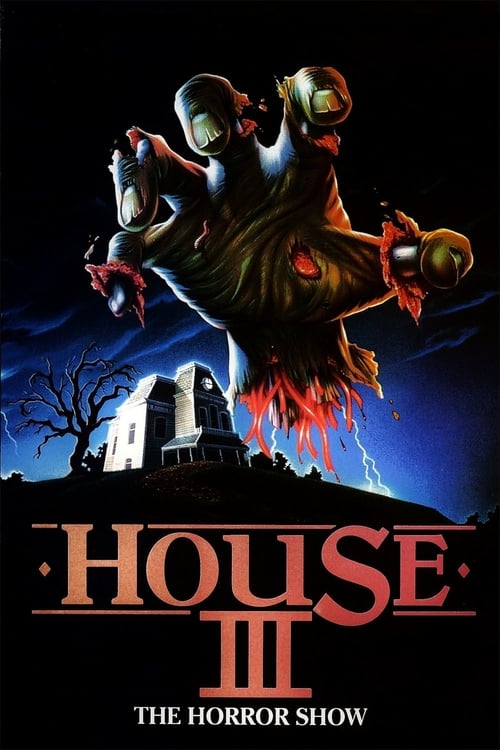
The Horror Show
Plot
Vowing revenge on the detective who apprehended him, serial killer "Meat Cleaver" Max Jenke returns from beyond the grave to launch a whole new reign of terror.
Get the Weekly Woke Watchlist
New and trending movies scored for woke bias, preachy messaging, and forced political themes — before you waste your evening.
No spam. One useful email per week.
Overall Series Review
Categorical Breakdown
The central conflict is a personal vendetta between two white males: the dedicated cop, Lucas McCarthy, and the pure evil white serial killer, Max Jenke. The narrative operates on individual character merit and a clear moral binary of good versus evil. There is no commentary on 'whiteness,' 'privilege,' or forced insertion of diversity; the focus remains entirely on the personal horror and action.
The entire plot centers on the defense of the protagonist's traditional, middle-class home and family from an external, demonic intrusion. The core Western institution of the family and home is portrayed as the sanctuary under attack from a chaos-wreaking entity, placing the narrative in direct opposition to civilizational self-hatred.
The gender dynamics are traditional. Detective Lucas McCarthy is the protective male hero and family man, while his wife, Donna, is primarily portrayed as a supportive, caring wife whose role involves enduring her husband's trauma and being the victim of the haunting. Women are not depicted as 'Girl Boss' figures, and masculinity is protective, but the wife's passive, supporting role slightly detracts from the 1/10 ideal of active complementarianism.
The narrative features a heterosexual, nuclear family (father, mother, son, daughter) as the core unit being terrorized. No themes of sexual ideology, alternative sexualities, deconstruction of the nuclear family, or gender theory are present in the plot. Sexuality is not a central component of any character's identity or the conflict.
The premise relies on the supernatural return of Max Jenke after his execution, suggesting a spiritual or transcendent reality where ultimate evil exists and seeks to inflict torment. The morality is objective, with Max being pure, demonic evil that the hero must overcome. This acknowledgement of a higher moral law, even via a dark supernatural force, is not anti-theistic, but the specific absence of traditional religious faith as the saving power moves it slightly away from the 1/10 score.
Get the Weekly Woke Watchlist
New and trending movies scored for woke bias, preachy messaging, and forced political themes — before you waste your evening.
No spam. One useful email per week.