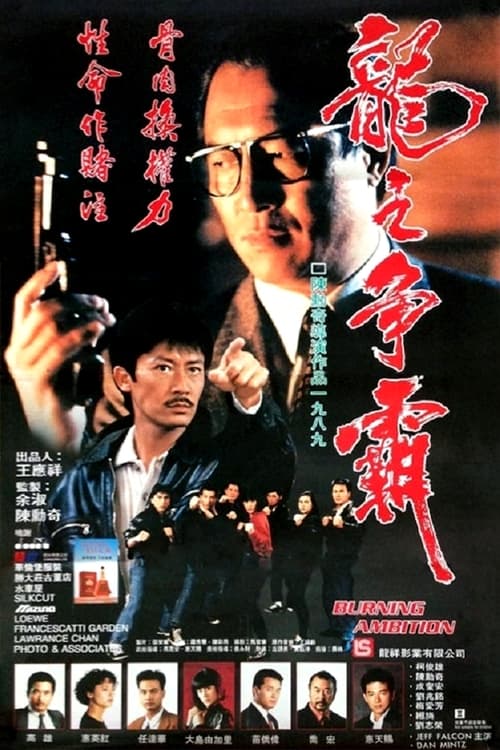
Burning Ambition
Plot
This is director/martial arts star Frankie Chan's unofficial remake of the Kinji Fukasaku film SHOGUN'S SAMURAI (1978). Instead of Japanese samurai in a period setting, we get modern day Chinese gangsters battling each other for the position left vacant after the mysterious death of their head honcho.
Get the Weekly Woke Watchlist
New and trending movies scored for woke bias, preachy messaging, and forced political themes — before you waste your evening.
No spam. One useful email per week.
Overall Series Review
Categorical Breakdown
The entire cast and setting are authentic to the Hong Kong Triad genre. The central conflict is purely a power struggle based on ambition and personal relationships within a single, ethnically Chinese criminal family. Character merit or failure is judged by competence in the gang war or by moral loyalty, not by race or immutable characteristics. There is no commentary on 'whiteness' or forced diversity.
The movie is a product of 1980s Hong Kong cinema, a local crime drama focusing on the internal corruption of a criminal organization. The narrative is not critical of Western civilization, nor does it elevate external cultures as morally superior. The film’s dramatic framework draws upon universal themes of ambition and tragedy, which have been compared to Shakespeare, suggesting a link to classic narrative structures rather than civilizational self-hatred.
Female characters, such as the two daughters and the patriarch's widow, are formidable figures involved in the violent conflict. The daughters are active, highly-skilled fighters, or 'femme fatales,' who display strength and competence in combat, specifically defending their father/family. Their competence is a fact of the action genre and serves the plot's theme of loyalty, not a narrative focused on emasculating males or lecturing that careerism (in this case, crime) is the only form of female fulfillment. The characters' actions are driven by filial duty and revenge.
The narrative is a standard Hong Kong Triad drama of the 1980s, entirely focused on family feuds and power. There are no elements of alternative sexualities being centered, nor is there any deconstruction or ideological critique of the nuclear family structure outside the criminal context of the Triad itself. No discussion of gender ideology or transitioning is present.
The conflict is a secular power struggle for a criminal enterprise. The film is a dark and cynical tragedy, but the amorality stems from the nature of the Triad world, not from an explicit critique of religion. Traditional religion, particularly Christianity, is not a factor in the plot, nor are there any religious characters depicted as villains or bigots. The morality of the story is driven by objective truth in the form of cause and consequence (betrayal leads to violence).
Get the Weekly Woke Watchlist
New and trending movies scored for woke bias, preachy messaging, and forced political themes — before you waste your evening.
No spam. One useful email per week.