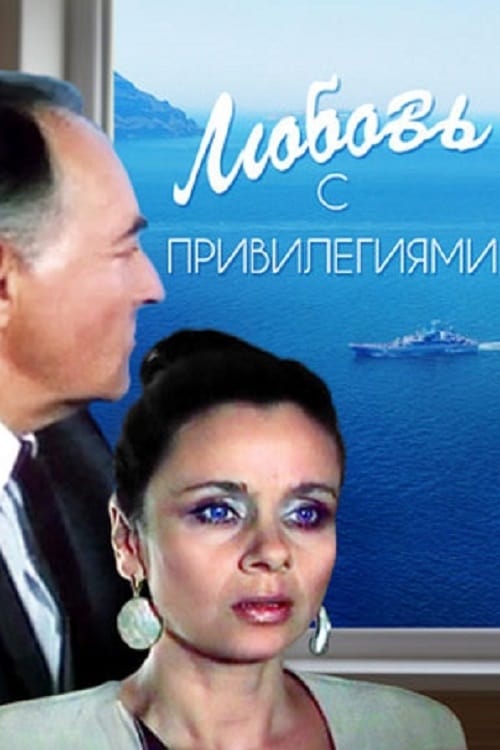
Love with Benefits
Plot
USSR, late 80's. Kozhemyakin, the former deputy chairman of the Council of Ministers, comes to Yalta for a vacation. Irina, who works as a van driver, is asked to meet him at the station. Accidental resort acquaintance unexpectedly grew into something more. Neither the difference in age, nor in social status did not become an obstacle. Irina agrees to become Kozhemyakin's wife and moves to Moscow.
Get the Weekly Woke Watchlist
New and trending movies scored for woke bias, preachy messaging, and forced political themes — before you waste your evening.
No spam. One useful email per week.
Overall Series Review
Categorical Breakdown
The central hierarchy is political and class-based: the Soviet Party elite (nomenklatura) versus the common people. The plot focuses on a class disparity that allows for the abuse of privilege and power. Character conflict is based on political merit (or corruption) and class background, not race or immutable characteristics.
The film is a direct critique of the Soviet system, its ruling class, and the historical crimes (political repression/executions) committed by that system. The film expresses hostility toward the corrupt and oppressive state apparatus and its representatives. Since the system being attacked is totalitarian Communism, which is antithetical to core Western institutions, this critique registers as a rejection of civilizational corruption, not civilizational self-hatred (Oikophobia).
The female lead, Irina, is a capable, practical working woman who enters the relationship not just for love, but to gain access to the Soviet power structure to pursue justice for her family. This portrays her as resourceful and driven, but it does not fit the 'Mary Sue' or 'Girl Boss' trope. Her primary motivation is the defense of her family's honor and history, which is an anti-anti-natalist theme, and the male lead is a powerful, complex figure, not a bumbling incompetent.
The plot is entirely focused on a traditional, if politically complicated, heterosexual relationship. The narrative centers on the nuclear family, specifically its destruction by the state and the daughter's mission to seek justice for it. There is no presence of alternative sexual ideologies, deconstruction of gender, or 'Queer Theory' concepts.
The film takes place in the officially atheist Soviet Union, and its conflict is entirely secular, centered on political morality, historical justice, and political corruption. There are no themes of hostility toward religion, specifically Christianity, nor is faith a source of conflict or strength for the characters.
Get the Weekly Woke Watchlist
New and trending movies scored for woke bias, preachy messaging, and forced political themes — before you waste your evening.
No spam. One useful email per week.