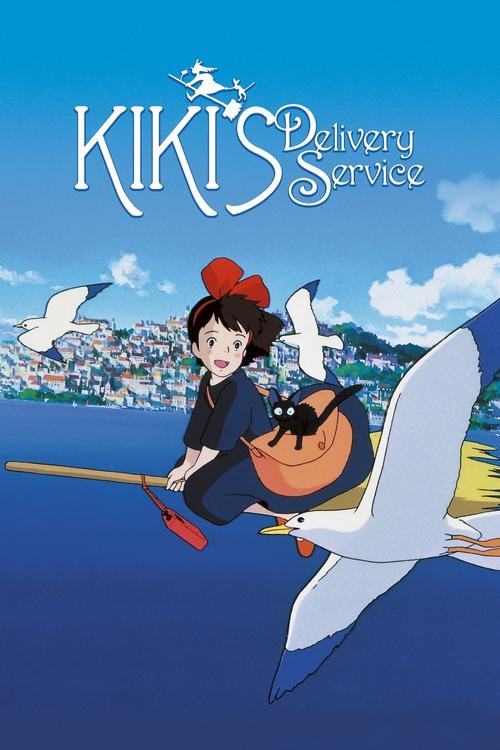
Kiki's Delivery Service
Plot
A young witch, on her mandatory year of independent life, finds fitting into a new community difficult while she supports herself by running an air courier service.
Get the Weekly Woke Watchlist
New and trending movies scored for woke bias, preachy messaging, and forced political themes — before you waste your evening.
No spam. One useful email per week.
Overall Series Review
Categorical Breakdown
The story centers entirely on the protagonist's personal merit and growth, not immutable characteristics. The central conflict involves her finding worth in her labor and earning her place in a new town. Character value is judged by the content of their service to the community. There is no vilification of any group, forced insertion of diversity, or race-swapping; casting is naturally colorblind within its European-inspired, pre-World War context.
The film is an embrace of a positive, stable civilization and community. Kiki's journey is based on a respected, ancient witch tradition. The town of Koriko is portrayed as a safe, vibrant, and functioning society where citizens support each other. Institutions like family and tradition are seen as a supportive structure for the young witch's journey, which directly contradicts the idea of civilizational self-hatred.
The lead, Kiki, is a strong, independent female working to establish a career, but she is not a 'Girl Boss' or 'Mary Sue'; she is frequently clumsy, suffers emotional setbacks, and temporarily loses her powers. Male characters like Tombo are supportive and friendly, not bumbling or toxic. The film features successful working women (Kiki, the artist Ursula, and the bakery owner Osono) who are also kind and nurturing. Osono is shown running a business while visibly pregnant and caring for her family, showcasing a complementary role where motherhood and career coexist with vitality, keeping the score low.
The narrative adheres to a normative structure, focusing on a traditional coming-of-age story that includes Kiki’s budding, wholesome friendship with a boy, Tombo. Sexual orientation or gender identity is not a subject of the plot or discussion. The film contains no ideological lecturing, centering of alternative sexualities, or deconstruction of the nuclear family.
There is no explicit hostility toward religion of any kind. Kiki's magic is treated as a hereditary skill or talent passed down by tradition, not an anti-theistic system. The protagonist overcomes her crisis of self-worth by tapping into her own faith and willpower to regain her abilities, pointing toward an internal, objective source of strength and morality rather than subjective relativism. The setting features traditional European architecture, including a prominent clock tower/bell tower, which is not demonized.
Get the Weekly Woke Watchlist
New and trending movies scored for woke bias, preachy messaging, and forced political themes — before you waste your evening.
No spam. One useful email per week.