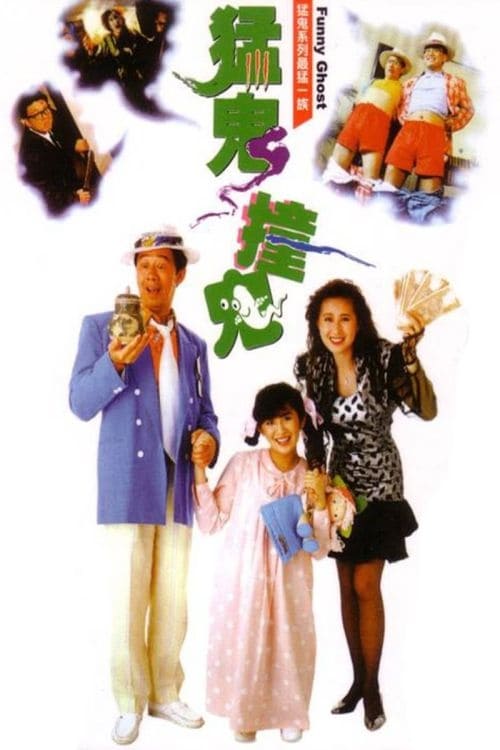
Funny Ghost
Plot
A woman seeks protection from a very mischievous ghost.
Get the Weekly Woke Watchlist
New and trending movies scored for woke bias, preachy messaging, and forced political themes — before you waste your evening.
No spam. One useful email per week.
Overall Series Review
Categorical Breakdown
The narrative is a crime/supernatural comedy centered on greed and slapstick in a Hong Kong setting. Characters are judged by their chaotic actions and immorality (gambling, conning, attempted suicide), not by their race or an intersectional hierarchy. There is no commentary on 'whiteness' or systemic oppression.
The film is a product of Hong Kong cinema and focuses on local cultural elements like Triads and traditional Chinese ghost folklore. The story contains no critique or hostility toward Western civilization, its institutions, or its ancestors.
Female characters are the primary drivers of the plot, which prevents a perfect 1/10 score, and male characters are frequently depicted as bumbling idiots or morally weak gangsters. However, the female leads are deeply flawed, selfish, greedy anti-heroes addicted to gambling, and the film contains humor considered sexist by modern standards. It is not a 'Girl Boss' narrative of female perfection.
The primary structure of the film is rooted in normative social dynamics, focusing on friendship, crime, and supernatural consequences. Sexuality is not centered as an identity or subject of lecture. The film's inclusion of homophobic humor, typical of 80s Hong Kong comedy, operates outside the framework of the 'Queer Theory Lens.'
The core of the plot is driven by traditional Chinese spiritualism and the supernatural power of a ghost contained in an urn, complete with rituals. This fully acknowledges an objective, powerful spiritual world, which directly counters the idea of a 'Spiritual Vacuum' or hostility toward faith.
Get the Weekly Woke Watchlist
New and trending movies scored for woke bias, preachy messaging, and forced political themes — before you waste your evening.
No spam. One useful email per week.