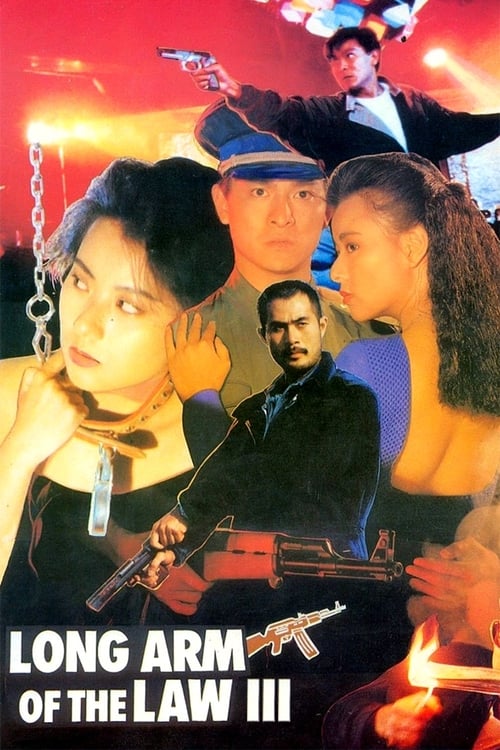
Long Arm of the Law III
Plot
Michal Mak's second sequel to his brother's action classic finds an ex-soldier/escaped death row prisoner fleeing to Hong Kong and forced to work for a gang of criminals when they kidnap the woman he loves.
Get the Weekly Woke Watchlist
New and trending movies scored for woke bias, preachy messaging, and forced political themes — before you waste your evening.
No spam. One useful email per week.
Overall Series Review
Categorical Breakdown
The plot does not rely on race or immutable characteristics through an intersectional lens; the central conflict is a national and cultural one between Mainland Chinese and Hong Kong Chinese. The characters are judged by their loyalty, honor, and criminal actions, with the protagonist being an honorable man forced into crime for love. There is no vilification of 'whiteness' or forced diversity, as the cast is overwhelmingly Asian.
The film offers pointed, contemporaneous criticism of the systems in both Mainland China (harsh, ruthless justice) and Hong Kong (exploitative capitalism and crime). This is a critique of political and social conditions, not a fundamental rejection of a home culture's heritage. A brief scene may show a British officer denigrating Chinese culture, which offers a minor critique of colonial control, but the primary self-hatred element is regional and systemic, not civilizational in the Western 'woke' sense.
Gender roles are highly traditional, centering on a desperate romantic rescue. The female lead's plot function is as the victim who must be saved, having been sold into prostitution and subjected to torture. This plot structure is the opposite of the 'Girl Boss' or 'Mary Sue' trope. The male protagonist's entire heroic arc is defined by his protective masculinity and singular, driving desire to rescue the woman he loves, promoting a complementarian and pro-romantic view of male-female dynamics.
The narrative's focus is on the intense, desperate romantic love between a man and a woman. The story contains zero element of centering alternative sexualities, deconstructing the nuclear family, or promoting gender ideology. The structure operates entirely within a normative framework regarding sexual identity.
The film is an action-crime drama focused on material survival, criminal activity, and justice systems. Religion, faith, and spirituality are completely absent from the plot and thematic discourse. Morality is shown as ambiguous and pragmatic (doing bad things for a good reason), but this is due to the genre conventions of 'heroic bloodshed' and 'neo-noir' and does not involve an explicit hostility toward or deconstruction of religious systems like Christianity.
Get the Weekly Woke Watchlist
New and trending movies scored for woke bias, preachy messaging, and forced political themes — before you waste your evening.
No spam. One useful email per week.