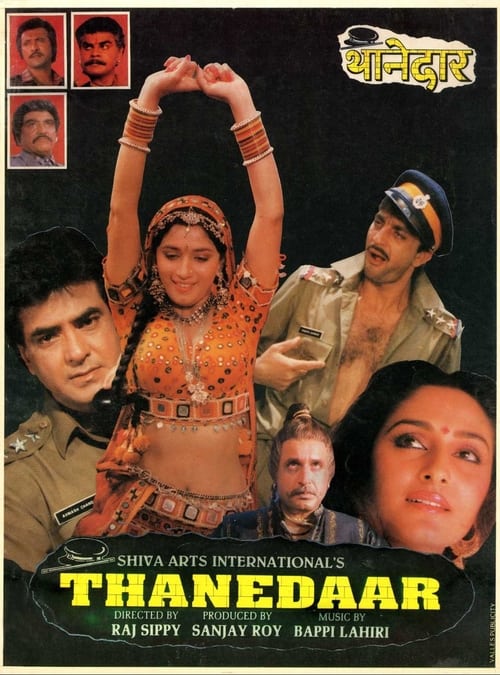
Thanedaar
Plot
Thanedaar is a 1990 Hindi action film directed by Raj N. Sippy and starring Sanjay Dutt, Madhuri Dixit, Jeetendra, Jaya Pradha and Kiran Kumar. The film is perhaps most remembered for the hit song Tamma Tamma Loge and its quirky dancing moves. It was the first pairing of Dutt and Dixit who went on to star in 7 films together including big box office successes Saajan (1991) and Khalnayak (1993).
Get the Weekly Woke Watchlist
New and trending movies scored for woke bias, preachy messaging, and forced political themes — before you waste your evening.
No spam. One useful email per week.
Overall Series Review
Categorical Breakdown
The narrative is entirely a story of universal meritocracy and moral consequence. Characters are defined by the content of their soul—one brother chooses the path of law and the other of crime due to circumstances of adoption and upbringing, not immutable characteristics. Casting is culturally authentic to the Indian setting. There is no focus on intersectional hierarchy or political lecturing on privilege.
The central conflict is a fight against local, individual corruption, represented by the cruel Thakur Ajgar Singh, a villain who operates as a tyrant within the system. The honest police force and the nuclear family of the good brother are presented as virtuous institutions and shields against chaos. The film does not demonize the home culture or its ancestors; it champions justice and traditional moral values within that culture.
Gender roles are conventional for the genre and the 1990 era. The female characters (Sudha and Chanda) are confident and courageous and participate actively in the plot but are primarily defined by their relationships to the male leads (wife and love interest). Motherhood is not criticized; the police officer brother has a 'delightful life' with his wife and daughter. The core heroic journey remains focused on the two male protagonists, but the women are not perfect 'Mary Sues' or explicitly anti-natal.
The film operates within a completely normative structure. The central romantic and familial relationships are all traditional male-female pairings. There is no presence of alternative sexual ideologies, deconstruction of the nuclear family, or discussion of gender theory, which is standard for a mainstream 1990 Bollywood action movie.
The conflict is based on an objective moral truth: good versus evil. The villain is unambiguously evil, committing murder and tyranny, while the heroes fight for justice. The narrative relies on a clear, transcendent moral law where virtue is rewarded and wickedness is punished. There is no hostility directed towards traditional religion or an embrace of moral relativism; the moral universe of the film is absolute.
Get the Weekly Woke Watchlist
New and trending movies scored for woke bias, preachy messaging, and forced political themes — before you waste your evening.
No spam. One useful email per week.