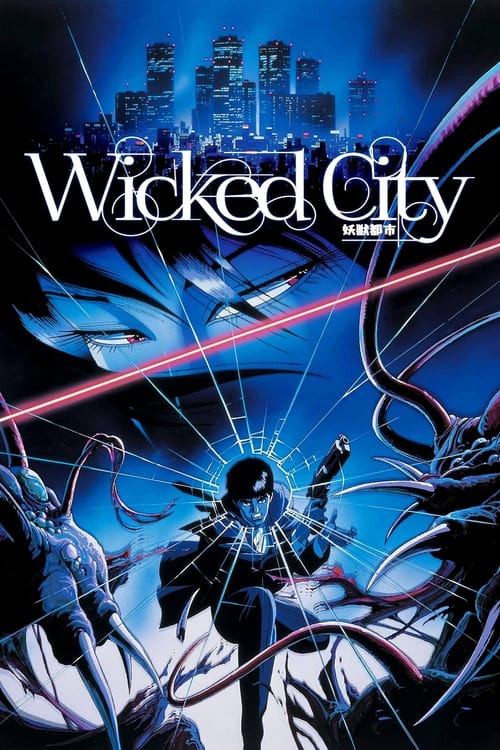
Wicked City
Plot
A peace treaty between the Earth and the Black World, a parallel universe of demons, is coming to an end. Two cops, Taki, a human male, and Maki, a female demon, are assigned to protect a diplomat who will help secure another treaty. A radical group of demons from the Black World are out to assassinate the diplomat and prevent the treaty; only the bond that forms between the two cops can save the Earth from destruction.
Get the Weekly Woke Watchlist
New and trending movies scored for woke bias, preachy messaging, and forced political themes — before you waste your evening.
No spam. One useful email per week.
Overall Series Review
Categorical Breakdown
The conflict is based on a species-level divide (human vs. demon), not modern intersectional identity markers. The successful partnership between the human male agent Taki and the female demon agent Makie, based on their shared mission, champions meritocracy over immutable characteristics. The narrative does not focus on privilege or systemic oppression based on race or modern political identity.
The central plot involves the Black Guard, a secret organization dedicated to protecting the human world from the chaos of the Black World. The human realm is shown as flawed and susceptible to vice, but its continued existence is the objective good that the protagonists fight to preserve. There is no element of civilizational self-hatred; the narrative is about defending one's home against an external, hostile 'other' dimension.
The female protagonist, Makie, is a powerful and capable agent from the demon world who functions as Taki's equal and is essential to the mission. However, the female characters in the film are also heavily sexualized, used as sexually aggressive predators, and are subjected to highly explicit and graphic sexual violence and degradation by the villains. This dynamic leans into dark fantasy tropes and erotic horror, contrasting sharply with the modern 'Girl Boss' trope by combining female capability with extreme victimization and objectification.
The core relationship and central erotic horror elements revolve around traditional male-female sexual dynamics. The movie’s sexual focus is intensely heterosexual and explicit. Alternative sexualities or gender theory are not present in the narrative or its themes, nor is there any attempt to deconstruct the nuclear family.
The movie operates within a metaphysical framework of distinct good/order (the peace treaty/human world) versus evil/chaos (the radical demons). This struggle implies a higher moral law at stake—the survival of the worlds through principled cooperation. Traditional religion is simply absent from the plot, which prevents any direct anti-theist message. The spiritual subtext supports an objective truth (peace is good, chaos is bad) rather than moral relativism.
Get the Weekly Woke Watchlist
New and trending movies scored for woke bias, preachy messaging, and forced political themes — before you waste your evening.
No spam. One useful email per week.