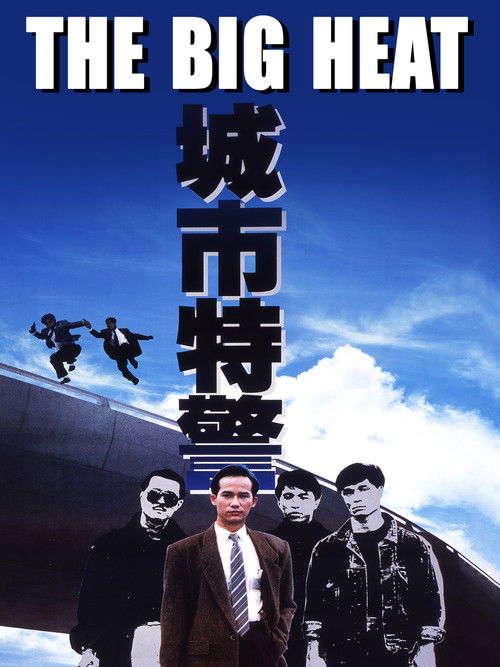
The Big Heat
Plot
A cop is losing the control of his right hand and cannot pull the trigger on time anymore. Before any accident happens, he decides to resign. Meanwhile his friend and informer is brutally murdered in Malaysia. Before leaving the force, he decides to find the killers with the help of his buddy, a young cop and an inspector from Kuala Lumpur.
Get the Weekly Woke Watchlist
New and trending movies scored for woke bias, preachy messaging, and forced political themes — before you waste your evening.
No spam. One useful email per week.
Overall Series Review
Categorical Breakdown
The film focuses on universal themes of justice, honor, and physical disability as the basis for the hero's struggle. Characters are judged by their actions as cops or gangsters, not by race or immutable characteristics. The Hong Kong cast playing Hong Kong characters reflects authentic cultural casting without forced diversity or the vilification of any ethnic group.
The narrative is a standard cops vs. gangsters story grounded in the urban setting of Hong Kong. It respects the sacrifices of the police and treats the institution of law enforcement as a shield against criminal chaos. Any thematic commentary points to a cynical or 'materialist' view of the crime world, not a fundamental self-hatred of the home culture or its ancestors.
Gender dynamics follow the conventions of the 1980s action genre, where the central conflict is a male-dominated story of revenge and professional honor. Female characters are peripheral to the main action, serving primarily as a rookie cop's love interest or a nurse. The narrative does not feature a 'Girl Boss' or 'Mary Sue' and does not engage in anti-natalist or emasculating messaging.
The core of the story maintains a normative structure, focusing on male-male police partnership and a traditional heterosexual pairing for the rookie cop. One villain has a sub-plot involving evidence of his homosexual activities, which is used as a point of shame and blackmail, serving as a plot device in opposition to 'centering alternative sexualities' or promoting Queer Theory.
The film operates entirely within a secular and materialist world of crime and policing. The morality is driven by personal codes of honor and justice, not religious faith or scripture. No characters are depicted as religious bigots or villains because of their faith, nor does the movie lecture against traditional religion.
Get the Weekly Woke Watchlist
New and trending movies scored for woke bias, preachy messaging, and forced political themes — before you waste your evening.
No spam. One useful email per week.