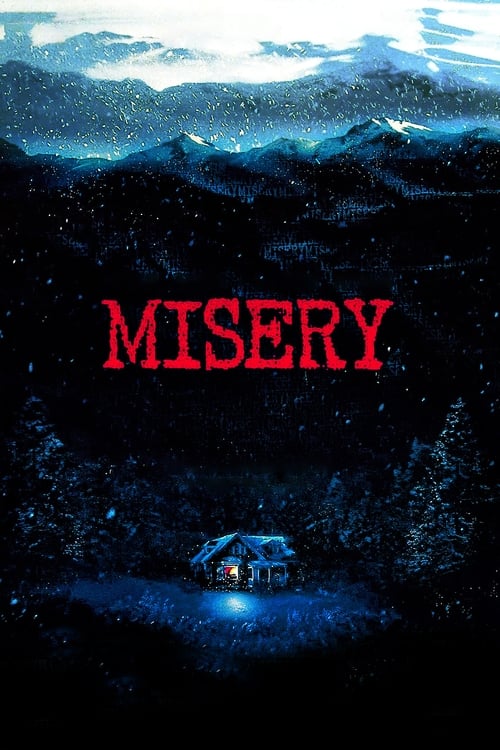
Misery
Plot
After an accident, acclaimed novelist Paul Sheldon is rescued by a nurse who claims to be his biggest fan. Her obsession takes a dark turn when she holds him captive in her remote Colorado home and forces him to write back to life the popular literary character he killed off.
Get the Weekly Woke Watchlist
New and trending movies scored for woke bias, preachy messaging, and forced political themes — before you waste your evening.
No spam. One useful email per week.
Overall Series Review
Categorical Breakdown
The story does not rely on race or immutable characteristics to drive the conflict; the main characters are two white individuals whose struggle is based on personal merit, career ambition, and severe psychological disturbance. Character is judged by the content of their soul, which in Annie's case is profoundly twisted. Casting is colorblind in the sense that the plot has no racial component, making the demographic characteristics irrelevant to the central theme.
The film does not frame Western culture or institutions as fundamentally corrupt. The villain is an isolated psychopath whose home becomes a private prison, not a critique of the national setting. Annie Wilkes displays a twisted, puritanical moral fervor, including co-opting religious justification for her deranged actions, but this is presented as a symptom of her personal madness, not a deconstruction or demonization of heritage. The movie primarily focuses on the terror of a personal nightmare.
The female character, Annie Wilkes, is the dominant figure who holds the male protagonist completely captive and physically helpless for the majority of the story. This dynamic inverts the traditional power structure of the genre, though the female character is portrayed as an unhinged, homicidal villain, not a 'Girl Boss' or heroic figure. The male lead is completely emasculated by his injuries and dependence on her. There is no explicit anti-natal or anti-family messaging, as the primary relationship is captor-victim.
Alternative sexualities and gender ideology are entirely absent from the plot and themes. The narrative maintains a normative structure by focusing intensely on the antagonistic male-female pairing at the heart of the conflict. Sexuality is not a factor in the story, and the film includes no political lecturing on sexual identity or gender theory.
Annie Wilkes, the antagonist, occasionally uses twisted, quasi-religious language to justify her horrific actions, claiming that God delivered the author to her. This frames her madness with a warped evangelical tone. However, the film itself maintains a clear moral compass, with Annie's actions being unambiguously monstrous crimes. The narrative embraces a Transcendent Morality, endorsing the objective pursuit of justice and the survival of the protagonist against an objectively evil force.
Get the Weekly Woke Watchlist
New and trending movies scored for woke bias, preachy messaging, and forced political themes — before you waste your evening.
No spam. One useful email per week.