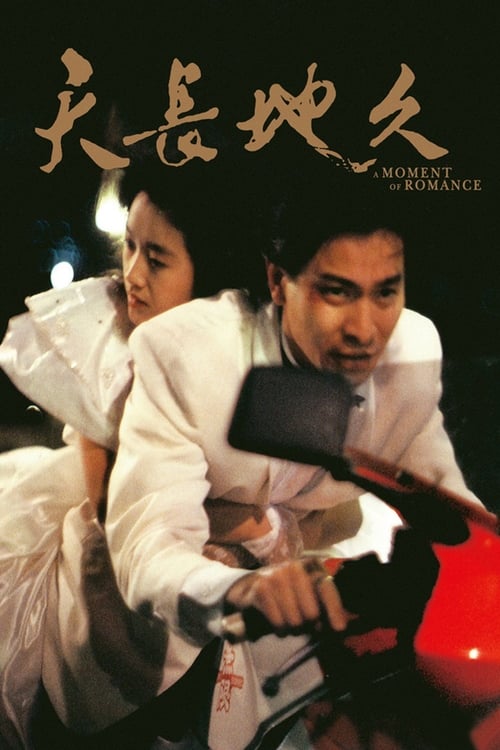
A Moment of Romance
Plot
After a young Triad member takes an upper-class girl hostage during his escape from a jewelry heist, the two find themselves falling in love, in spite of the repercussions caused by their forbidden relationship.
Get the Weekly Woke Watchlist
New and trending movies scored for woke bias, preachy messaging, and forced political themes — before you waste your evening.
No spam. One useful email per week.
Overall Series Review
Categorical Breakdown
The main conflict is strictly based on a socio-economic class divide between a low-level Triad member and an upper-class girl, not race or intersectional identity. The film is a Hong Kong production with an all-East Asian cast, so there is no theme of 'vilification of whiteness' or 'race-swapping'. Characters are defined by their moral choices and personal loyalty, embodying a universal star-crossed love archetype.
The film does not express self-hatred toward its culture or ancestors. It is a celebrated piece of 1990s Hong Kong cinema that vividly and energetically captures the city's environment and style. The narrative focuses on the internal struggle of the lovers against a chaotic urban criminal element and societal pressures, not a systemic critique of the entire culture as fundamentally corrupt.
The female lead is a figure of innocence and devotion whose arc is tied entirely to her tragic love for the male protagonist, Wah Dee. She is not a 'Girl Boss' or a 'Mary Sue'; her major acts are sacrifices made for love, such as running alone in a wedding dress. The male lead, despite being a criminal, is framed as a protective figure and a 'bad boy with a heart of gold,' celebrating a traditional type of protective masculinity. The film centers on a passionate heterosexual romance, which opposes anti-natalist messages.
The story is a direct, traditional romantic tragedy centered on a male-female pairing. There is no mention of alternative sexualities, gender theory, or the deconstruction of the nuclear family. The presentation adheres to a normative structure where sexuality remains a private aspect of the core romance.
The conflict is secular and social: crime, loyalty to a gang, social class, and the police. The movie explores the idea of a 'transcendental nature of love beyond the material world,' suggesting a higher moral truth that the lovers pursue. There is no antagonism toward traditional religion, nor is there a lecture on moral relativism; the actions of the Triad members are clearly depicted as morally corrupt, providing a clear objective moral framework.
Get the Weekly Woke Watchlist
New and trending movies scored for woke bias, preachy messaging, and forced political themes — before you waste your evening.
No spam. One useful email per week.