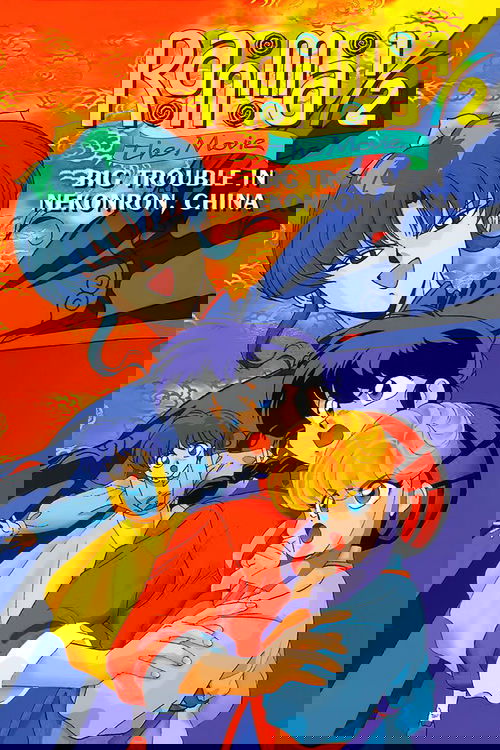
Ranma 1/2 the Movie: Big Trouble in Nekonron, China
Plot
When Prince Kirin of the 7 Lucky Gods shows up at the Tendo dojo looking for his bride-to-be, guess who's accidentally holding the scroll that signifies his future mate? Why, Akane, of course, and the rest of the Ranma crew is forced to take a boat to China in order to save her from the horrors of marriage and a diet of pickled vegetables.
Get the Weekly Woke Watchlist
New and trending movies scored for woke bias, preachy messaging, and forced political themes — before you waste your evening.
No spam. One useful email per week.
Overall Series Review
Categorical Breakdown
Characters are judged solely on their martial arts skill and their antagonistic or heroic roles in the plot, adhering to a universal meritocracy. The conflict is between Japanese and Chinese martial artists, but it is not framed as a lecture on racial hierarchy or systemic oppression; the villain is simply a martial artist seeking a bride by force.
The plot functions as a defense of the home and its established relationships as the main characters travel away to rescue one of their own from a foreign, antagonistic culture's marriage tradition. There is no deconstruction or demonization of the heroes' Japanese culture or ancestors; the foreign land serves as the place of conflict.
The movie reduces the female lead, Akane Tendo, to a traditional damsel-in-distress role. She is abducted, remains passive, and is depicted as cooking for her captor, an action widely cited as contrary to her established defiant character. The primary motivation for the male protagonist, Ranma, is to rescue her, reinforcing a protective masculinity and negating the 'Girl Boss' trope entirely.
The main character's forced gender-bending is consistently treated as a comedic curse and a source of misfortune, not as a celebration of fluid identity. Ranma maintains a strong male identity and uses his female form opportunistically as a visual gag. The narrative frames non-traditional gender presentations as humorous perversions rather than centering them for political commentary.
The antagonists are the 'Seven Lucky Gods,' inspired by folklore, but they are presented strictly as martial arts opponents and a tyrannical family/prince. The film uses these mythological figures for action sequences, which removes any profound religious or anti-theistic message. The moral stakes are personal (love and friendship) and not a critique of Objective Truth or traditional religious institutions.
Get the Weekly Woke Watchlist
New and trending movies scored for woke bias, preachy messaging, and forced political themes — before you waste your evening.
No spam. One useful email per week.