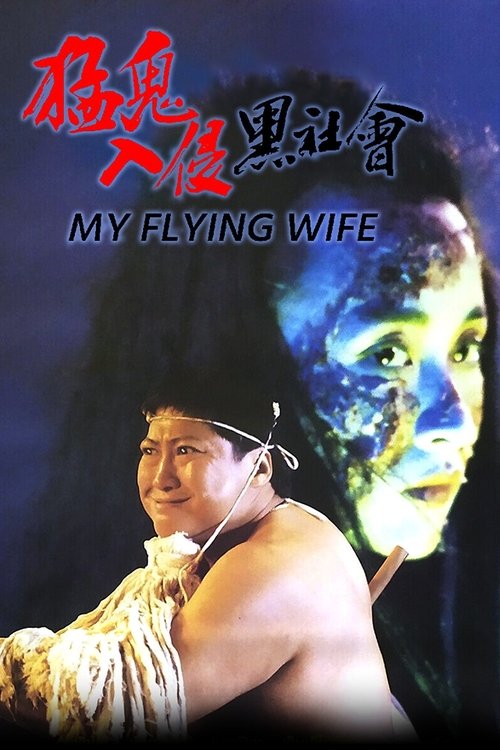
My Flying Wife
Plot
A woman who is in debt to loan sharks is about to commit suicide to escape her debts. Two ghosts are waiting to take her soul when she dies, but at the last moment she is rescued by a member of the loan shark gang who is in love with her. The ghosts, angry at being deprived of a soul, take their vengeance on the gang.
Get the Weekly Woke Watchlist
New and trending movies scored for woke bias, preachy messaging, and forced political themes — before you waste your evening.
No spam. One useful email per week.
Overall Series Review
Categorical Breakdown
The film is a 1991 Hong Kong production featuring an entirely Chinese cast, focusing on local crime and folklore. The plot and character arcs are defined by personal merit, loyalty, and romantic fate, not by race or immutable characteristics. There is no vilification of 'whiteness' or forced insertion of diversity, as the cultural context is internally consistent.
The narrative is centered on a Hong Kong setting, drawing upon local spiritual concepts like ghosts, reincarnation, and the Triad subculture. The film treats the home culture and its supernatural elements as the natural backdrop for the conflict. The tone is a genre blend of comedy and horror, and there is no attempt to frame the home culture as fundamentally corrupt or racist, nor does it promote the 'Noble Savage' trope.
The female lead is introduced in a state of desperation, debt, and attempted suicide, which is a vulnerable position, not a 'Girl Boss' trope. The plot features a traditional romantic rescue by a man who stands up to his boss for her. However, one key female antagonist is a 'scornful spirit' who seeks vengeance after being abandoned in a past life, which creates a story arc of female agency and resentment, though her ultimate motivation involves a maternal desire for her son's reincarnation. The overall focus is on distinct, complementary roles in a romantic context.
The core of the story revolves entirely around two traditional male-female romantic pairings, one in the present and one based on a past-life connection between a male character and a female ghost. The narrative operates within a normative structure, centered on the pursuit of heterosexual love and destiny. Sexual ideology, alternative sexualities, or the deconstruction of the nuclear family are absent from the plot.
The entire horror-comedy genre relies on the explicit presence of the supernatural, with ghosts, reincarnation, and the mechanics of the afterlife (the 'reincarnation pearl') driving the conflict. This validates a transcendent spiritual reality and a cosmic moral order where actions have consequences in the next life, which is the opposite of a spiritual vacuum. The film draws on Chinese folk religion and Buddhist concepts of fate and rebirth, not a critique of Christianity.
Get the Weekly Woke Watchlist
New and trending movies scored for woke bias, preachy messaging, and forced political themes — before you waste your evening.
No spam. One useful email per week.