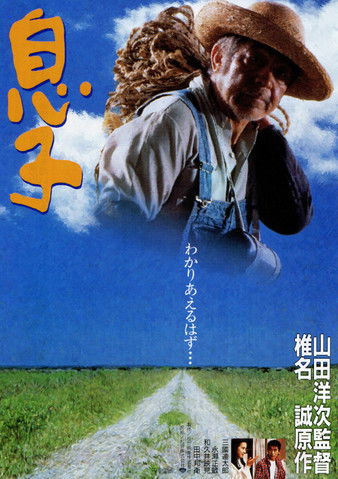
My Sons
Plot
Tetsuo is a young man living in Tokyo, who falls in love with a deaf-mute factory girl. He has always felt jealous of his college-educated brother, but ultimately wins both the girl and his father's acceptance and support in a touching and refreshing way.
Get the Weekly Woke Watchlist
New and trending movies scored for woke bias, preachy messaging, and forced political themes — before you waste your evening.
No spam. One useful email per week.
Overall Series Review
Categorical Breakdown
The narrative focuses on class and job status—Tetsuo is a factory worker, his brother is college-educated—but judges characters by their actions and the content of their soul, which is the definition of universal meritocracy. Race is not a factor as the film is set in Japan with an entirely Japanese cast, and there is no vilification of 'whiteness' or forced diversity.
The central conflict is an internal Japanese one: the friction between the traditional, rural life and the modern, urban, industrial life in Tokyo. The film explores this generational variance with a sense of pathos and respect, not as a condemnation of the culture as fundamentally corrupt. It respects the core institution of family and the father's life sacrifices.
The female love interest is a deaf factory worker. Her character serves primarily as a source of romantic motivation and moral clarity for the male protagonist's journey. She is neither presented as a 'Mary Sue' nor is the plot designed to lecture on female professional superiority. The focus is on a traditional male-female relationship dynamic within a narrative centered on male familial relationships.
The story is a heterosexual romance between the male protagonist and a female love interest. The entire narrative structure is built upon the traditional male-female pairing and the eventual acceptance of this pairing by the father, firmly establishing a normative structure. There is a complete absence of queer theory, sexual identity as a primary trait, or gender ideology lecturing.
The movie is a secular family drama rooted in traditional Japanese cultural values, not Western religion. It contains no hostility toward Christianity or any other traditional faith. Morality is depicted as an objective good tied to sincerity, familial love, and the work ethic, not as subjective power dynamics.
Get the Weekly Woke Watchlist
New and trending movies scored for woke bias, preachy messaging, and forced political themes — before you waste your evening.
No spam. One useful email per week.