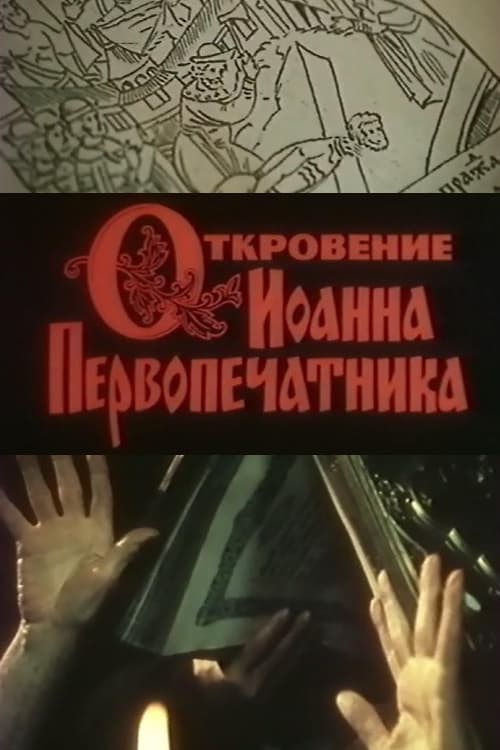
The Revelation of John the Foreprinter
Plot
Historical drama about the engineer of the first printing press built in Muscovite Rus' and his complicated relationship with the state under the rule of tsar Ivan IV ("the Terrible"). Released for theaters as a 2-part 147 minute movie and for TV as a 5-part 5-hour miniseries.
Get the Weekly Woke Watchlist
New and trending movies scored for woke bias, preachy messaging, and forced political themes — before you waste your evening.
No spam. One useful email per week.
Overall Series Review
Categorical Breakdown
The central conflict exists as an ideological and political struggle between a craftsman-intellectual and the absolute monarchy, not a conflict based on race or modern intersectional hierarchy. The characters are judged by their actions concerning the new technology and their moral alignment with either progress or tyranny. The casting is historically appropriate for the 16th-century setting and does not include forced diversity.
The film strongly critiques the political and cultural establishment of Muscovite Rus'. The narrative forces the protagonist to abandon his homeland because the power structure, including the conservative church and the Tsar's violent regime, persecutes him and destroys his work. This frames the national home culture's leadership as deeply flawed and hostile to its own progress and enlightenment.
The story focuses entirely on the male political and intellectual sphere of the 16th century. Female roles are limited to historical supporting figures, such as the printer's wife, who dies tragically. There is no presence of the 'Girl Boss' trope, the emasculation of men as a theme, or a discussion of modern career-over-family ideology.
The film's historical setting and its focus on a specific conflict of technology, state, and church mean the narrative contains no commentary on alternative sexualities, gender theory, or the deconstruction of the nuclear family. These concepts are entirely absent from the story's concerns.
The movie is not anti-religion, but it is deeply critical of the institutional power of certain reactionary religious figures. The printer's work is a mission for the Church (printing the Apostol), and he is initially supported by a senior cleric. The antagonists are the ignorant, conservative monks who burn the printing house out of fear and superstition, separating the virtues of faith and knowledge from the corruption of a fearful institution.
Get the Weekly Woke Watchlist
New and trending movies scored for woke bias, preachy messaging, and forced political themes — before you waste your evening.
No spam. One useful email per week.