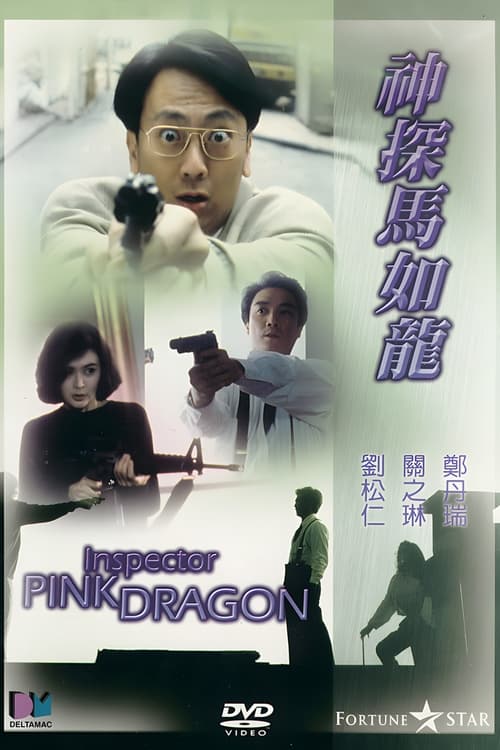
Inspector Pink Dragon
Plot
A blundering Hong Kong police inspector, Ma Yu Long, goes under cover to investigate a high-class businessman, Teng Kuo Chiao, who was bribing city planning officer Ma Yu Yu to build roads to suit his needs and is suspected to be liable in Yu's death. In the meantime, Long courts Yu's high school sweetheart, Julia, who wants the inspector to cheat Chiao out of some money as part of the revenge deal.
Get the Weekly Woke Watchlist
New and trending movies scored for woke bias, preachy messaging, and forced political themes — before you waste your evening.
No spam. One useful email per week.
Overall Series Review
Categorical Breakdown
The narrative centers on a classic crime drama trope of corruption and undercover investigation. All central characters share the same immutable characteristics, and the conflict is based on morality and criminality, not race or intersectional hierarchy. The story operates on a principle of individual moral failure and a pursuit of justice, indicating a focus on character merit.
The film criticizes corruption within the local Hong Kong police and city planning bureaucracy. This is a critique of criminal and moral failure within the system, not a denigration of the underlying Hong Kong culture or an attack on ancestors. The main villain is an internal, corrupt businessman, not an external force framed as morally superior.
The male protagonist, Inspector Ma Yue-lung, is repeatedly depicted as incompetent, bumbling, sleazy, cowardly, and disastrous in both his professional and personal life. The women in his life, Julia and Ching, are significantly more resourceful and drive the emotional and vengeful elements of the plot. This dynamic strongly embodies the emasculation of the male lead and the 'men are bumbling idiots' trope for comedic effect.
The core relationships involve a traditional male-female love triangle and fiancée dynamic. There is no presence of alternative sexualities, gender ideology, or deconstruction of the nuclear family unit. The film follows a normative structure for its romantic and familial subplots.
The film is a straightforward action-crime comedy focused on police work and political corruption. The plot has no mention of religion or spiritual themes. The moral framework follows a conventional, objective law-and-order structure where criminality and corruption are treated as definable evils requiring punishment.
Get the Weekly Woke Watchlist
New and trending movies scored for woke bias, preachy messaging, and forced political themes — before you waste your evening.
No spam. One useful email per week.