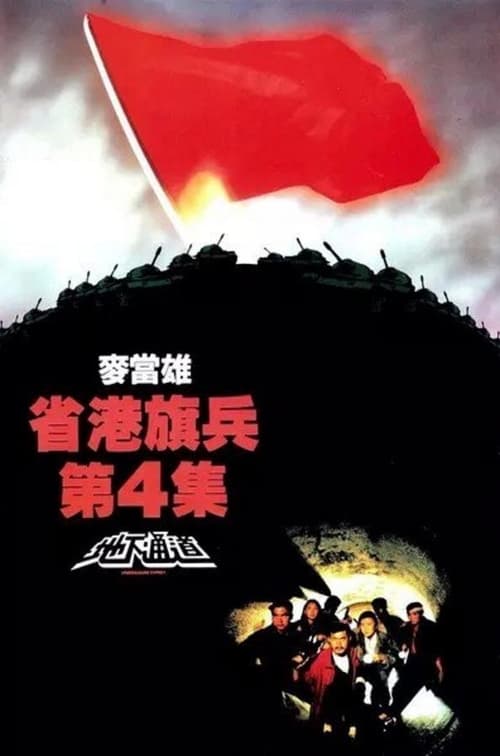
Long Arm of the Law IV Underground Express
Plot
The final entry in Michael and Johnny Mak's Long Arm of the Law series, Underground Express once again tells a story of gangsters versus police, focusing on the difference between how both factions act depending if they're coming from Hong Kong or Mainland China.
Get the Weekly Woke Watchlist
New and trending movies scored for woke bias, preachy messaging, and forced political themes — before you waste your evening.
No spam. One useful email per week.
Overall Series Review
Categorical Breakdown
The narrative conflict focuses on political ideology and moral action rather than race or immutable characteristics. Character merit is judged by their decision to save lives from an authoritarian government, exemplified by gangsters who become heroes. The main political division is between Hong Kong liberty and Mainland Chinese Communist authoritarianism, not a Western-style intersectional hierarchy.
The film's focus is a direct, critical commentary on the brutality of the Mainland Chinese Communist government and its response to the 1989 Tiananmen Square protests. It champions freedom and the action taken against a totalitarian, anti-Western ideology. The narrative treats resistance against authoritarianism as a moral necessity, demonstrating a gratitude for liberty, which is antithetical to civilizational self-hatred.
The core plot is a violent, male-dominated action thriller focused on a smuggling operation. One female character is a prominent student leader and activist whose idealism is portrayed seriously and without mockery. There is no emphasis on emasculating male characters or anti-natalist messaging, with gender roles and dynamics being secondary to the high-stakes political conflict.
The film is a political action thriller from 1990, and all available plot details center exclusively on the rescue operation of pro-democracy students. The narrative contains no elements of centering alternative sexualities, deconstructing the nuclear family, or lecturing on gender theory. Sexuality and gender identity are not a part of the film's public theme or content.
The movie establishes a clear moral high ground: saving innocent lives from an oppressive, brutal totalitarian state. The focus on resistance against tyranny supports the concept of objective moral truth and a higher moral law regarding human rights and freedom. The themes directly contradict moral relativism, and there is no known hostility toward traditional religion.
Get the Weekly Woke Watchlist
New and trending movies scored for woke bias, preachy messaging, and forced political themes — before you waste your evening.
No spam. One useful email per week.