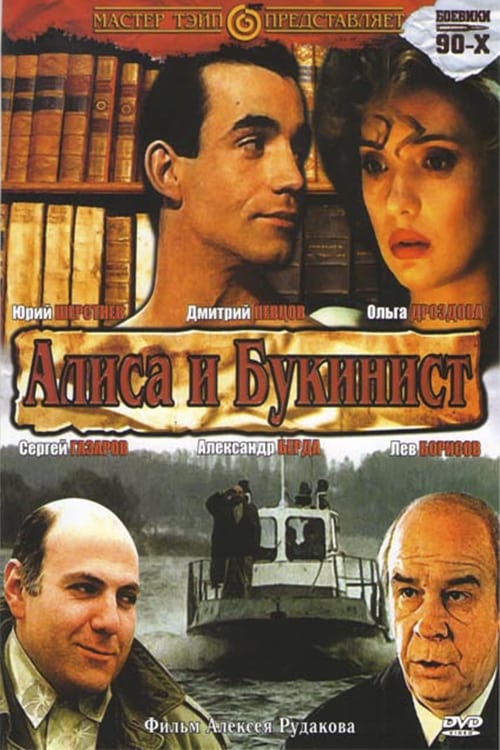
Alice and the Bookseller
Plot
The star of Russian cinema Dmitry Singers has earned a reputation as a strong guy and won a lot of women's hearts in his previous works. This time his hero is the owner of a magnificent collection of ancient books. Mafia structures are not averse to warm your hands on rare editions valued at millions of dollars. In the way of the bookseller appears beautiful Alice. Life and love would be beautiful if you do not know what the task was the beloved of the hero. The battle between good and evil develops into a Grand battle. Honor, friendship, love stands the hero, leaving at stake his own life.
Get the Weekly Woke Watchlist
New and trending movies scored for woke bias, preachy messaging, and forced political themes — before you waste your evening.
No spam. One useful email per week.
Overall Series Review
Categorical Breakdown
The characters are defined by their actions as a bookseller, mafia members, and a love interest with a secret. The narrative is a moral and criminal conflict, and the story does not reference intersectional hierarchy, racial vilification, or the concept of 'whiteness.' Character worth is entirely determined by their moral actions in the battle between good and evil.
The central conflict involves the hero defending his nation's cultural heritage—a magnificent collection of ancient books—from criminals. The hero stands for honor and sacrifices his life to protect these treasures. The plot is about defending one's cultural values against domestic corruption, not self-hatred toward Western or Russian civilization.
The male protagonist is explicitly a 'strong guy' and a hero, embodying protective masculinity and sacrificing his life for honor and love. The female lead, Alice, is complex due to her mysterious 'task,' indicating a dramatic rather than a 'Mary Sue' trope. The core relationship is based on romantic love, which affirms the male-female pair, not anti-natalism or male emasculation.
The story is a crime and romantic drama focused exclusively on the male hero and his female love interest, Alice. The narrative does not feature any centering of alternative sexualities, deconstruction of the nuclear family, or promotion of gender ideology.
The entire plot is structured as a "battle between good and evil," with the hero fighting for 'honor' and 'love.' This reliance on objective moral binaries establishes a Transcendent Morality. The film does not portray traditional religion as the root of evil or endorse moral relativism.
Get the Weekly Woke Watchlist
New and trending movies scored for woke bias, preachy messaging, and forced political themes — before you waste your evening.
No spam. One useful email per week.