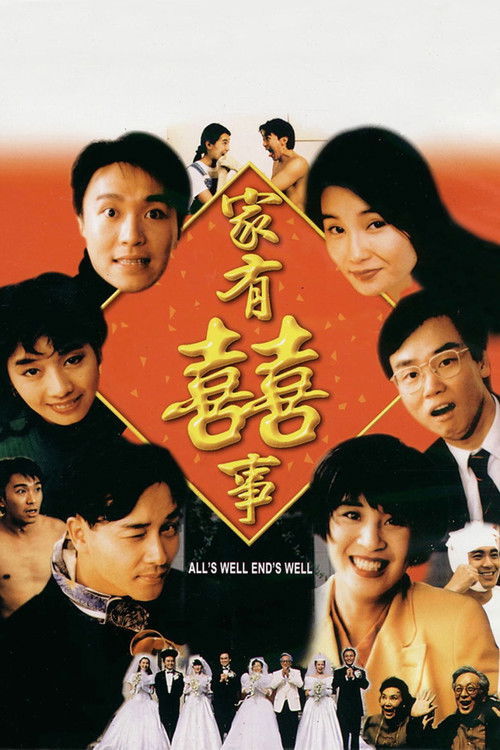
All's Well, Ends Well
Plot
Three brothers living with their father fib and play pranks to win parental approval for themselves and their romances.
Get the Weekly Woke Watchlist
New and trending movies scored for woke bias, preachy messaging, and forced political themes — before you waste your evening.
No spam. One useful email per week.
Overall Series Review
Categorical Breakdown
The film is a Hong Kong comedy featuring an all-Chinese cast, meaning there is no 'vilification of whiteness' or 'forced insertion of diversity' within the context of a culturally specific production. Characters are judged entirely on their relational ethics—being a good spouse or family member—rather than on any immutable characteristics or racial hierarchy.
The film is a Lunar New Year comedy, a genre specifically designed to celebrate the institution of the family and communal harmony, directly contradicting civilizational self-hatred. The story's ultimate goal is the restoration of the family and three traditional, joyful weddings, reinforcing the institution of the home and ancestry.
The eldest brother's wife is initially a devoted but 'unattractive' housewife whom her husband mistreats and cheats on. She leaves, remakes herself into a 'glamorous karaoke hostess,' and forces her husband to grovel and genuinely reform to win her back. This arc grants the woman significant agency, criticizing the toxic male and celebrating her self-improvement and empowered return to the relationship on her own terms. The ultimate conclusion is a celebrated reunion and marriage, not anti-natalism or an anti-family 'career is the only fulfillment' message.
The middle brother is portrayed as an effeminate floral arranger who enjoys 'women's hobbies'. His primary romantic foil is his cousin, who is explicitly described by a reviewer as possessing 'masculine traits' and a 'butch lesbian' energy. Their ensuing 'gender-bending battle of the sexes' is played for absurdist comedy. While the film centers characters with non-traditional gender expressions, the narrative's conclusion sees the 'effeminate' male and 'butch' female characters pair up in a traditional male-female marriage, using the gender play for slapstick humor rather than centering a non-heteronormative ideology.
The film is a secular Hong Kong family comedy focused entirely on social and romantic relationships. The ethical framework is based on universal principles of sincerity, honesty, and familial respect. There is no presence of traditional religion, Christianity, or any hostility toward faith, moral relativism, or a spiritual vacuum.
Get the Weekly Woke Watchlist
New and trending movies scored for woke bias, preachy messaging, and forced political themes — before you waste your evening.
No spam. One useful email per week.