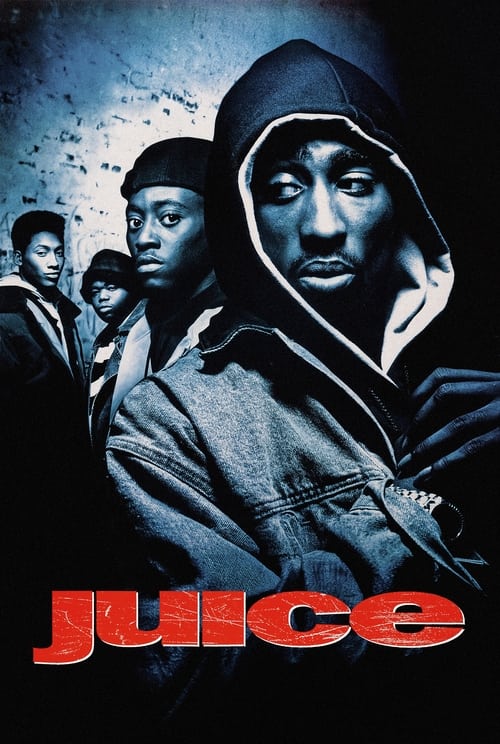
Juice
Plot
Four Harlem friends -- Bishop, Q, Steel and Raheem -- dabble in petty crime, but they decide to go big by knocking off a convenience store. Bishop, the magnetic leader of the group, has the gun. But Q has different aspirations. He wants to be a DJ and happens to have a gig the night of the robbery. Unfortunately for him, Bishop isn't willing to take no for answer in a game where everything's for keeps.
Get the Weekly Woke Watchlist
New and trending movies scored for woke bias, preachy messaging, and forced political themes — before you waste your evening.
No spam. One useful email per week.
Overall Series Review
Categorical Breakdown
The film centers entirely on African-American characters in Harlem, focusing on a challenge specific to their environment: the pursuit of 'respect' through violence rather than merit. The core conflict is a character-driven moral choice between two Black protagonists, Q and Bishop. The villain is a Black male, and the police are shown as a source of harassment but are also depicted as legitimate 'street troops in the fight against crime.' The narrative avoids turning into a political lecture on systemic oppression, grounding its tragedy in personal responsibility and toxic peer pressure.
The movie is a critique of the violent aspects of street culture and the pressure to gain respect through criminal acts, but it does not broadly demonize American or Western civilization. The setting is portrayed with authenticity and captures the hip-hop culture of the era. The few glimpses of family life suggest homes can be 'poor but supportive,' and the film's moral core acts as an internal warning against self-destruction, not a rejection of heritage.
The narrative is overwhelmingly focused on the four male protagonists and their quest for power. Female characters are largely relegated to the periphery, serving as mothers, girlfriends, or background figures, and are given almost no significant character development or agency. There are no 'Girl Boss' or 'Mary Sue' characters, and the story does not engage with overt feminist or anti-natalist messaging.
The movie does not feature or discuss alternative sexualities, gender ideology, or the deconstruction of the nuclear family. The film's themes are exclusively tied to a hyper-masculine pursuit of street dominance and respect among young men, adhering strictly to a normative structure by default of its hyper-focused genre.
Religion, faith, and spirituality are not central to the film's plot or themes. The morality on display is secular, presenting a classic 'moral play' where the protagonist must choose between his dream and a life of violence. The film's cautionary message against killing and crime aligns with traditional moral laws without explicitly invoking or attacking any specific religion, particularly Christianity.
Get the Weekly Woke Watchlist
New and trending movies scored for woke bias, preachy messaging, and forced political themes — before you waste your evening.
No spam. One useful email per week.