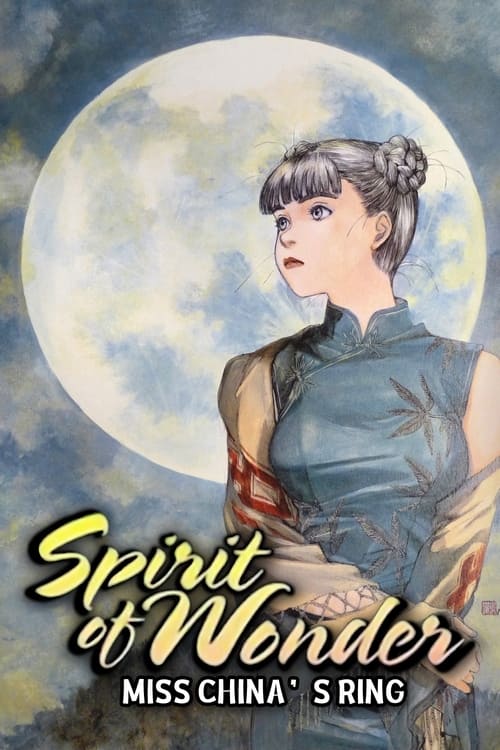
Spirit of Wonder: Miss China's Ring
Plot
Sometime during the late 19th century, a young Asian girl has made a place for herself in a seaside town as the owner and operator of the Tenkai restaurant and boarding house... Yet "Miss China," as the locals call her, is in the dumps. She's got a Mad Scientist named Breckenridge living upstairs who is chronically late with the rent, and she's pining for Jim, a handsome watchmaker's apprentice whom she mistakenly believes is pursuing the local flower girl. But this isn't our world. It is a world that has the Spirit of Wonder, where every so often, just occasionally mind you, amazing things happen. The Mad Scientist actually has come up with an incredible invention, and Jim has an unbelievable plan to use it to give Miss China the most beautiful ring in all the World.
Get the Weekly Woke Watchlist
New and trending movies scored for woke bias, preachy messaging, and forced political themes — before you waste your evening.
No spam. One useful email per week.
Overall Series Review
Categorical Breakdown
The film’s focus is a character-driven romance and comedy, not a lecture on systemic oppression. Miss China is an Asian woman and a competent business owner. Her two main Western tenants are comically bumbling and financially incompetent, creating an inversion of traditional competence, but this serves a comedic and romantic function, not a vilification of whiteness. The story centers on personal merit and romantic affection, not immutable characteristics.
The setting is a Western seaside town in a nostalgic, proto-steampunk era, celebrating the whimsical spirit of classic Western science fiction writers like Jules Verne and H. G. Wells. The narrative contains no hostility toward Western civilization, ancestors, or home culture. Core Western institutions like small-town life are portrayed as charming.
Miss China is a highly capable and independent businesswoman who manages a restaurant and boarding house. This trait aligns with the 'Girl Boss' trope. However, her core character motivation is her secret, traditional, and unfulfilled romantic pining for the handsome male lead, Jim. The men are financially incompetent dreamers, but Jim is the romantic hero who attempts a grand, protective gesture to win her over, which balances the gender dynamic toward a complementarian narrative.
The core of the plot is a heterosexual romance between the main female and male characters. The narrative contains no content related to alternative sexualities, gender ideology, or the deconstruction of the nuclear family. Sexuality is kept private and secondary to the romantic plot.
The story is a simple, light-hearted science fiction and romance tale. The narrative does not reference religion, traditional faith, or Christianity in any way. The moral compass of the story centers on the objective good of love and the wonder of discovery, with no embrace of moral relativism.
Get the Weekly Woke Watchlist
New and trending movies scored for woke bias, preachy messaging, and forced political themes — before you waste your evening.
No spam. One useful email per week.