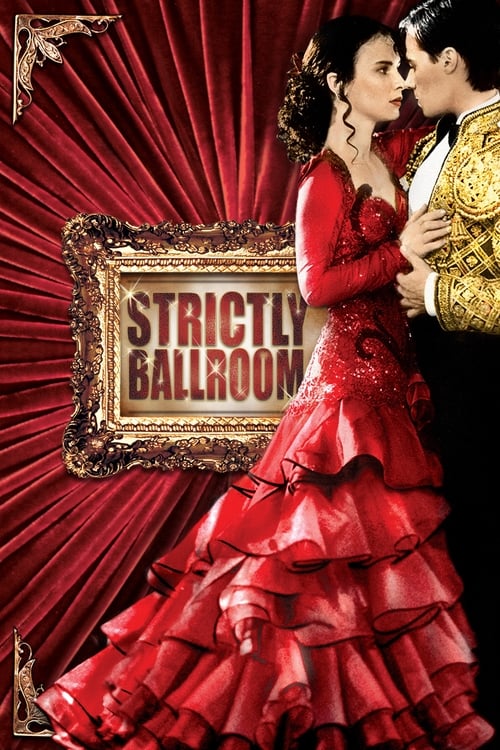
Strictly Ballroom
Plot
Brave new steps put Scott's career in jeopardy. With a new partner and determination, can he still succeed?
Get the Weekly Woke Watchlist
New and trending movies scored for woke bias, preachy messaging, and forced political themes — before you waste your evening.
No spam. One useful email per week.
Overall Series Review
Categorical Breakdown
The central conflict pits the corrupt, hyper-conservative, white Anglo-Australian establishment (the Dance Federation) against the virtuous, authentic, and passionate Spanish immigrant outsider (Fran and her family). The Anglo-Australian characters are primarily caricatured as manipulative, hysterical, or evil, while the migrant characters are elevated as possessing a superior, life-affirming culture. The narrative suggests that the repressed white male protagonist must be saved by adopting the superior culture of the 'Other'.
The dominant Anglo-Australian ballroom institution is portrayed as a source of corruption, rules, conformity, and artificiality, which stands as a metaphor for a conservative, stifling national attitude. The culture of the Spanish immigrant family is celebrated as a 'stark contrast' that is 'more real' and spiritually authentic, directly contrasting and deconstructing the value of the home culture's tradition.
The film critiques the rigid gender roles within the ballroom world, suggesting the institution enforces a 'patriarchal authority' and a strict gender binary. Women entrenched in the system (like Scott's mother and ex-partner) are depicted as selfish, hysterical, and backbiting. The female lead, Fran, is presented as a strong, assertive outsider who calls the male lead a 'coward' to motivate his rebellion, but the core relationship is a traditional male-female romance, and Scott's masculinity is ultimately redeemed, not eliminated.
The film focuses entirely on a traditional male-female pairing and a heterosexual romance. The narrative maintains a normative structure regarding sex and family. No alternative sexualities are centered, and no political lecturing on gender theory is present.
The conflict is purely secular, focused on the arbitrary rules of a dance competition bureaucracy versus artistic freedom and personal integrity. Religion or faith is not a theme. No Christian characters are villains or bigots, and morality is not framed in terms of spiritual or religious power dynamics.
Get the Weekly Woke Watchlist
New and trending movies scored for woke bias, preachy messaging, and forced political themes — before you waste your evening.
No spam. One useful email per week.