Wicked City
Plot
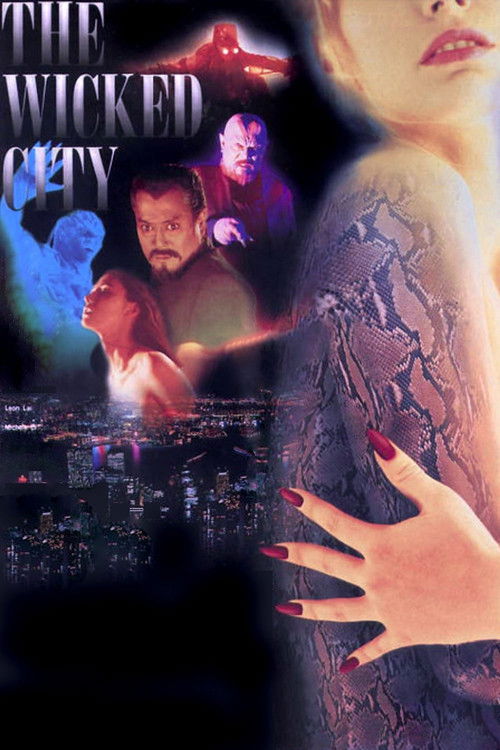
Taki and his partner Kai is assigned to go after Daishu for selling a drug from the Rapters's world, called 'Happiness' which causes people to evaporate.
Get the Weekly Woke Watchlist
New and trending movies scored for woke bias, preachy messaging, and forced political themes — before you waste your evening.
No spam. One useful email per week.
Overall Series Review
Categorical Breakdown
The narrative uses the conflict between 'Humans' and 'Rapters' as a clear racial allegory. The key supporting character, Kai, is a half-Rapter who experiences explicit distrust and discrimination from his human police colleagues due to his immutable characteristics (species heritage). The plot is driven by the struggle for coexistence and prejudice against a defined minority group. The setting in Hong Kong and the use of primarily East Asian actors means the critique of 'whiteness' is absent.
The movie is set in Hong Kong and focuses on a conflict between two worlds (Human and Rapter), not a deconstruction of a specific national or Western heritage. The human world is depicted as vulnerable to the demonic forces, but the narrative does not frame the home culture as fundamentally corrupt or racist in a civilizational self-hatred sense. There is no demonization of ancestors or Western institutions.
Female characters like the Rapter agent Windy are active participants in the conflict as an agent and informant. The primary female-male pairing (Taki and Windy) culminates in the concept of having a child to ensure peace between worlds. The narrative features women taking action, but it does not contain themes of female perfection or the explicit anti-natalist messaging that views motherhood as a 'prison.'
The core relationships involve a traditional male-female romantic pairing between Taki and Windy. The central plot device is the conception of a child to serve as a peace treaty. The narrative centers on this normative male-female structure, focusing instead on species and political conflict. No alternative sexual or gender ideologies are introduced or lectured on.
The story involves demons ('Rapters') and a parallel world ('Rapter World'), but this is a supernatural-fantasy framework rather than a critique of organized religion. The morality is based on pragmatic necessity (peace vs. war) between two groups. No hostility is directed toward faith, Christianity, or objective moral law.
Get the Weekly Woke Watchlist
New and trending movies scored for woke bias, preachy messaging, and forced political themes — before you waste your evening.
No spam. One useful email per week.