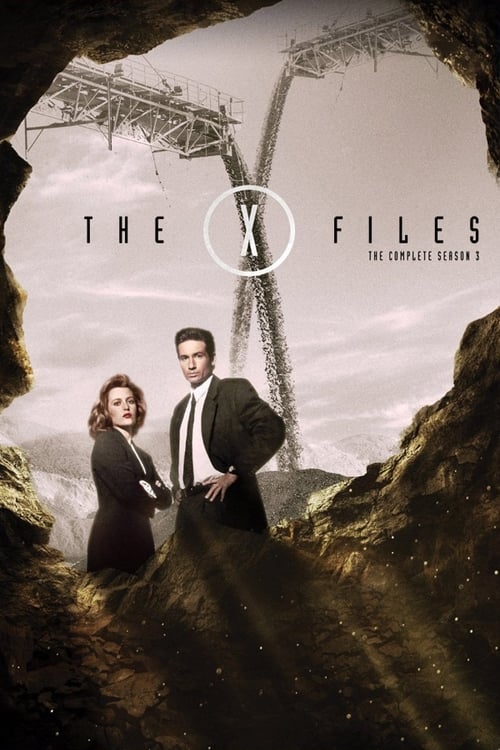
The X-Files
Season 3 Analysis
Season Overview
Mulder is missing and assumed dead . . . although Scully experiences a vision in which he is still alive. Yet even as they are reunited, each must deal with an additional personal loss, tragedies that ultimately serve to strengthen their connection to each other. And they soon find themselves depending on that strength as familiar foes resurface and preconceived notions are shattered.
Season Review
Categorical Breakdown
The core antagonists, The Syndicate, are explicitly depicted as older, powerful white males running a shadow government that commits horrific acts against its own people, which is a clear vilification of the established white power structure. Mulder is saved and rehabilitated by a Navajo elder in a positive representation that contrasts sharply with the corruption of his own Western heritage. The focus, however, remains on a universal conspiracy against 'The Truth,' not on lecturing about immutable characteristics or intersectional hierarchy.
The season earns a high score due to its complete deconstruction of American governmental institutions. The revelation of the conspiracy linking the modern shadow government to Nazi human experimentation via Operation Paperclip frames the US establishment and its ancestors as fundamentally corrupt, treacherous, and actively malevolent toward its own citizens. The show presents a deep civilizational self-hatred for the established American state.
Dana Scully is an established, highly competent scientist and federal agent whose strength and skepticism are central to the show. Her character is not a 'Mary Sue' but is repeatedly targeted and victimized by the male-led conspiracy (due to her abduction and sister’s murder) as a direct consequence of her work, which is a commentary on her place in a patriarchal system. The narrative ultimately celebrates her competence and determination, and Mulder is a capable partner, not a bumbling male stereotype.
The season is based on traditional narrative structures, focusing entirely on the professional and personal relationship of a male and female partner. There is no presence of alternative sexual ideologies, centering of LGBTQ+ characters, or narrative deconstruction of the nuclear family as a political act. Sexuality is largely private and incidental to the main plot mechanics.
The season actively and respectfully engages with faith, specifically Dana Scully's devout Roman Catholicism. Episodes like 'Revelations' and 'Talitha Cumi' use Christian symbolism, stigmata, and a Christ-like healer figure, with the ultimate message often framing faith and spiritual belief as a source of strength, moral truth, and an essential counterpoint to Mulder's scientific skepticism. Traditional religion is treated as a moral shield, not the root of evil.