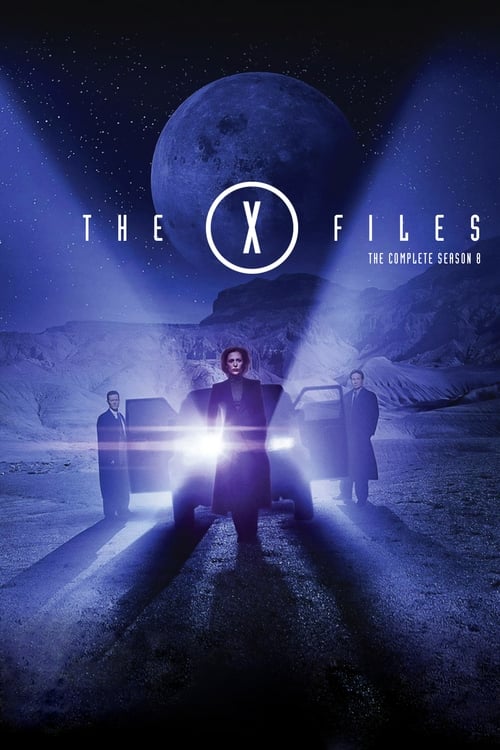
The X-Files
Season 8 Analysis
Season Overview
After Mulder’s disappearance, Scully returns to FBI headquarters to find Special Agent John Doggett heading up a FBI manhunt for her partner. Knowing that type of search will prove futile, Scully and Skinner turn to the Lone Gunmen in hopes of uncovering information about additional UFO activity around the time of Mulder’s disappearance. Although such information leads them to Gibson Praise, the man with Gibson, a man who appears to be Mulder, is in fact an alien bounty hunter. Finally realizing that Mulder will not be found so easily, Agent Doggett is officially assigned to the X-Files. Now, after all she has been through with Mulder, it is Scully who is “the believer” and who must find a way to work with “the skeptic,” John Doggett.
Season Review
Categorical Breakdown
The narrative places its value on character merit and professional competence rather than identity. The main conflict is between human characters—regardless of their race or sex—and a secret government-alien conspiracy. The introduction of Agent John Doggett, a white male, presents him as an ethical, competent, and respectful partner who is a professional equal to Scully. The inclusion of Agent Monica Reyes is a genuine, colorblind casting choice that supports the main agents.
The season continues the series' long-running theme of profound distrust of the American government and its highest institutions, which are portrayed as fundamentally corrupt, treacherous, and actively collaborating with alien forces to undermine humanity. This vilification of one's own government and its protectors is the source of the score. However, the agents who fight this conspiracy (Scully, Doggett, Skinner, Lone Gunmen) are framed as righteous heroes dedicated to protecting the nation's integrity and its citizens, which works against total civilizational self-hatred.
The core of the season's mythology is Dana Scully's miraculous pregnancy, a storyline that celebrates the feminine mystery of life and culminates in the triumph of the traditional nuclear family unit. Doggett's character is introduced as a highly competent, capable man who displays protective masculinity and operates as Scully's equal, showing professional respect for her intelligence and authority. There is no anti-natalist messaging or emasculation of male characters.
The season adheres entirely to a normative structure. The central emotional and mythological development is the birth of the child, William, to the male and female leads, Mulder and Scully. The narrative explicitly frames this as the victory of the 'nuclear family.' Sexual orientation and alternative gender identities are not present, centered, or used for political commentary.
The season heavily employs Judeo-Christian religious iconography and allegory, framing Scully's pregnancy and Mulder's return from death in terms of the Nativity, the Passion, and resurrection. The miraculous, medically-impossible nature of Scully's child is presented as a point of transcendent spiritual significance. While there is a general theme of spiritual mystery, faith is consistently treated as a source of strength, countering hostility toward traditional religion or an embrace of moral relativism.