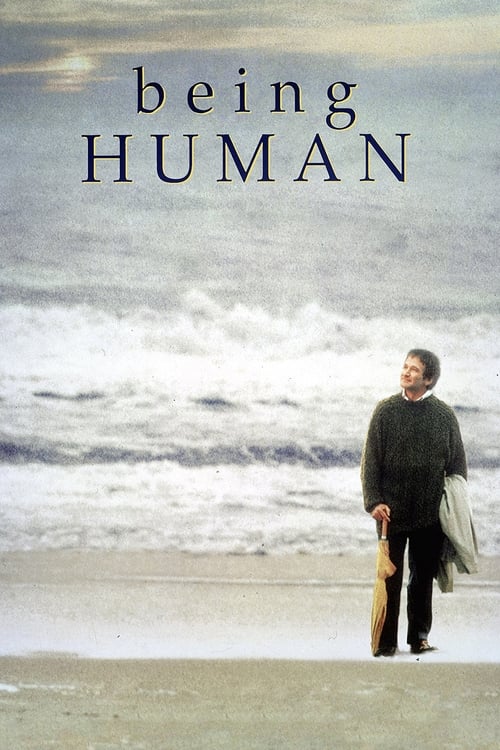
Being Human
Plot
One man must learn the meaning of courage across four lifetimes centuries apart.
Get the Weekly Woke Watchlist
New and trending movies scored for woke bias, preachy messaging, and forced political themes — before you waste your evening.
No spam. One useful email per week.
Overall Series Review
Categorical Breakdown
Character worth is judged by a universal metric of courage and self-mastery, not by race or immutable characteristics. The protagonist is an Everyman whose soul transcends the particularities of his historical incarnation. The story focuses on internal moral conflict rather than external systemic oppression.
The film utilizes various historical Western-adjacent settings as backdrops for a universal human story. The narrative critiques individual failings like cowardice and foolishness within those settings, but does not frame Western home cultures or ancestors as fundamentally corrupt or morally inferior to external cultures. The goal is to return to the establishment of home and family.
The core motivation for the male protagonist is his failure to protect and find his wife and children across lifetimes. The narrative implicitly celebrates motherhood and the family unit as the ultimate goal and source of identity. The story centers on the male's need to develop reliability and inner strength to fulfill a protective, familial role, which is a complementarian view of gender roles.
The narrative's central pursuit is the restoration of the nuclear family—the search for the wife and children—which it frames as the essential human bond. The film entirely focuses on traditional male-female pairing and the integrity of the family unit across the ages, with no centering of alternative sexual ideologies or deconstruction of the nuclear family structure.
The film is based on a transcendent, spiritual premise—the journey of a single soul through different incarnations—which acknowledges a higher plane of existence. While not overtly theological, the pursuit of courage and obligation implies a higher moral law and objective truth. Historical settings include characters engaged in religious acts or considering the priesthood, showing faith as an element of life rather than a source of evil.
Get the Weekly Woke Watchlist
New and trending movies scored for woke bias, preachy messaging, and forced political themes — before you waste your evening.
No spam. One useful email per week.