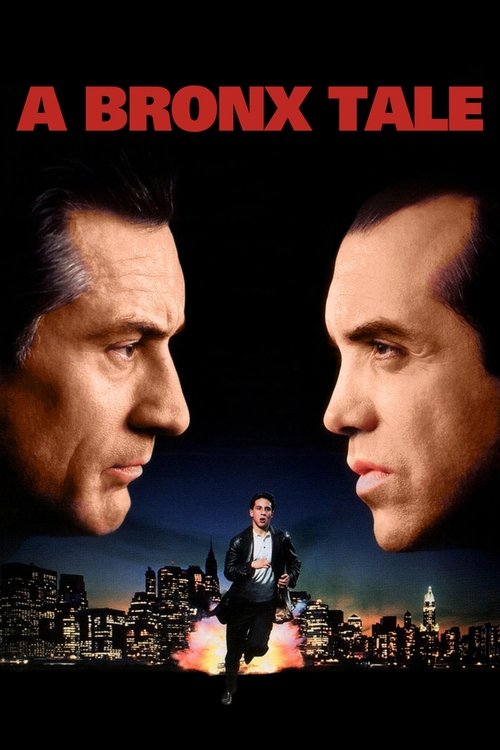
A Bronx Tale
Plot
Set in the Bronx during the tumultuous 1960s, an adolescent boy is torn between his honest, working-class father and a violent yet charismatic crime boss. Complicating matters is the youngster's growing attraction - forbidden in his neighborhood - for a beautiful black girl.
Get the Weekly Woke Watchlist
New and trending movies scored for woke bias, preachy messaging, and forced political themes — before you waste your evening.
No spam. One useful email per week.
Overall Series Review
Categorical Breakdown
The plot contains significant racial tension and prejudice within the Italian-American neighborhood, which is the 'white' culture of the film. However, the narrative's central moral lesson is a plea for universal meritocracy: Calogero's decision to date a Black girl and his rejection of his friends' racial violence are validated by the tragic ending for those who adhere to identity-based hatred. The villainization is of racism and crime, not 'whiteness' itself, as the moral hero is the working-class white father.
The film does not frame its home culture—the Italian-American Bronx neighborhood—as fundamentally corrupt. The community is presented with an authentic mix of good and bad elements. The moral center of the film, the father Lorenzo, is explicitly celebrated as a hero of Western civilization for his honest, working-class dedication to family. The narrative praises the protective institutions of the family and the dignity of labor.
The film adheres to a traditional family structure where the father, Lorenzo, is the sole breadwinner and the mother is a homemaker. The central conflict and character development are male-centric, focusing on the father-son and father-figure dynamic. The female love interest is a catalyst for the protagonist's moral growth regarding race, not a 'Girl Boss' archetype, and no anti-natalist or anti-family messaging is present.
The narrative features a traditional, nuclear family structure and focuses entirely on heterosexual relationships, including the central interracial romance. No themes of alternative sexualities, queer theory, or deconstruction of the nuclear family are present in the story.
The core of the movie is a sustained debate about objective moral law versus moral relativism. The father, Lorenzo, represents a transcendent, absolute moral path based on honesty and hard work. Though organized religion is not a primary focus, the entire story is built on the concept of objective 'right' and 'wrong' and the consequences of choosing the moral low road, a structure completely opposed to subjective moral relativism.
Get the Weekly Woke Watchlist
New and trending movies scored for woke bias, preachy messaging, and forced political themes — before you waste your evening.
No spam. One useful email per week.