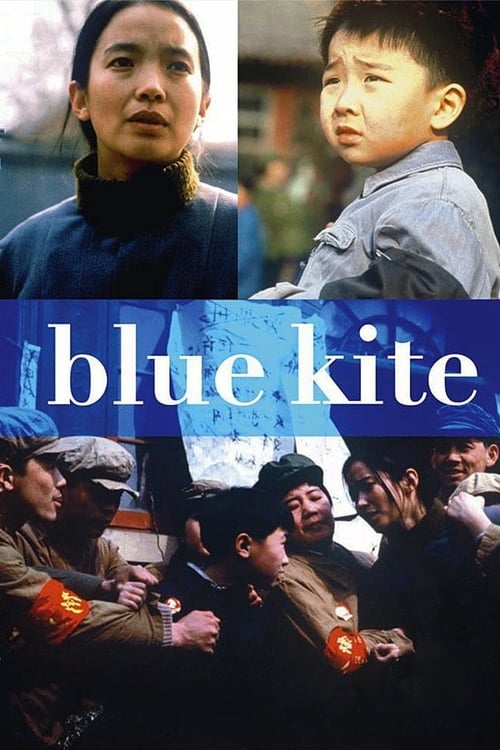
The Blue Kite
Plot
A young man recalls his childhood growing up in a poor alley in Beijing during the 1950s and 1960s.
Get the Weekly Woke Watchlist
New and trending movies scored for woke bias, preachy messaging, and forced political themes — before you waste your evening.
No spam. One useful email per week.
Overall Series Review
Categorical Breakdown
The entire cast and setting are ethnically homogeneous (Chinese) and historically authentic to Beijing in the 1950s and 60s. Conflict is based on political ideology and class labels (Rightist, Cadre) imposed by the totalitarian state, not on immutable characteristics or race. Merit and character are constantly judged and destroyed by the political system, which is the film’s central critique.
The film criticizes the destructive political regime (Maoist Communism) and its policies, which tear apart the family and community. It does not demonize the underlying Chinese civilization, culture, or ancestors. The initial community life is shown with warmth and traditional family institutions (the extended family and neighborhood) are viewed as a 'shield against chaos' that the political system actively dismantles.
The main female character, Shujuan, is strong and resilient, but her primary goal is maintaining a stable, loving family for her son. Her happiness is defined as 'being with' her child. Her three husbands are depicted as good, loving men who are tragically destroyed by the political state, which is shown as usurping the father's role. Motherhood and the nuclear family are presented as the central, vital institution that political forces seek to break.
The narrative centers entirely on the struggle of a traditional male-female pairing and their nuclear family to survive under political repression. There is no presence of alternative sexualities, gender ideology, or deconstruction of the nuclear family outside of the destruction caused by the oppressive state.
The core conflict is political, not religious. The state's political ideology (Maoism) functions as the only 'moral' law, which the film critiques for forcing moral people to behave irrationally and immorally. The film champions transcendent morals such as personal loyalty, family bond, and parental love over the subjective, manufactured political morality, presenting these human values as the true source of strength.
Get the Weekly Woke Watchlist
New and trending movies scored for woke bias, preachy messaging, and forced political themes — before you waste your evening.
No spam. One useful email per week.