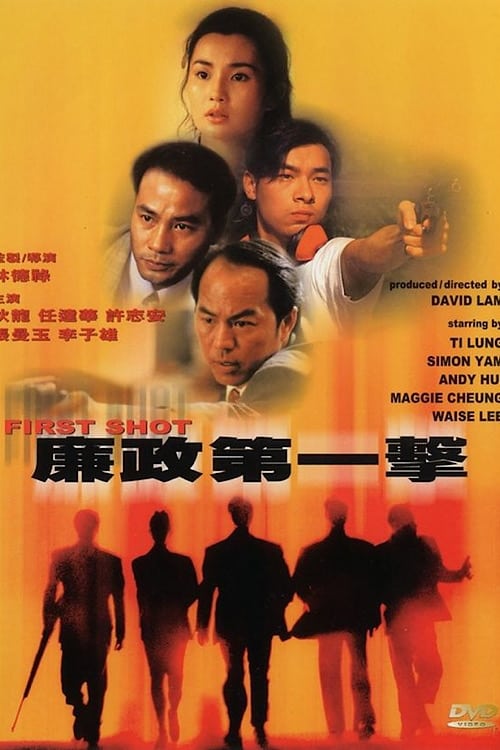
First Shot
Plot
During a period of widespread police corruption, Ti Lung is a stubborn cop who takes on both the mob and the political establishment.
Get the Weekly Woke Watchlist
New and trending movies scored for woke bias, preachy messaging, and forced political themes — before you waste your evening.
No spam. One useful email per week.
Overall Series Review
Categorical Breakdown
The film operates on Universal Meritocracy, where the conflict is explicitly defined as good, principled men fighting a corrupt system and mob. All characters, heroes and villains alike, are judged by their actions and integrity, not race or immutable characteristics. The casting reflects the historical setting of 1970s Hong Kong.
The film criticizes the endemic police corruption in the British colonial administration of Hong Kong, which ultimately leads to the establishment of the ICAC. The critique is aimed at systemic *corruption* and the breakdown of law and order, framing core institutions like law and justice as worthy of protection and reform, which aligns with Western classical liberal values, not civilizational self-hatred.
The main female character, a solicitor, is a competent professional who serves as a key logistical ally for the male hero's anti-corruption team, but the narrative focus and action sequences are heavily centered on the male characters. The lead hero's brief interaction with his family frames traditional masculinity as protective, which avoids the 'Girl Boss' or emasculation tropes.
The film has a very minor, isolated scene in a gay bar used as a location for the heroes to go undercover to gather intelligence. The scene is noted by contemporary reviewers for being brief and potentially used for light, incidental comic relief, but it does not center alternative sexualities, deconstruct the nuclear family, or contain any political or gender ideology lecturing.
The core of the movie is a clear moral struggle between justice/honesty (the hero) and crime/corruption (the villains), implicitly acknowledging an objective moral law. Religion or anti-theistic themes are not present in the narrative.
Get the Weekly Woke Watchlist
New and trending movies scored for woke bias, preachy messaging, and forced political themes — before you waste your evening.
No spam. One useful email per week.