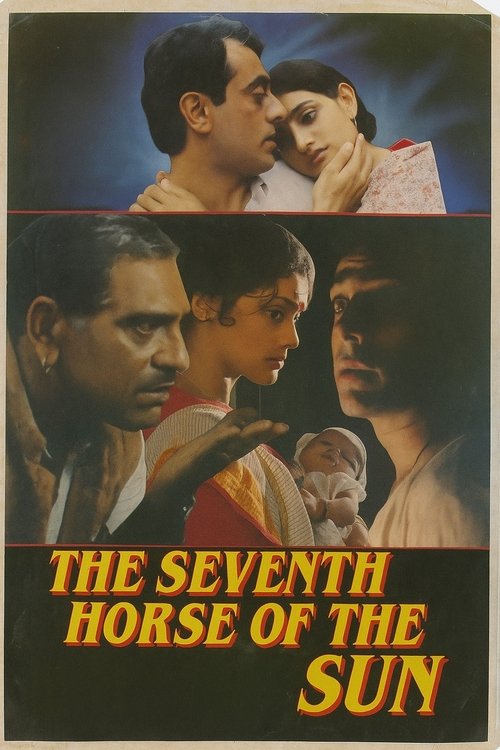
The Seventh Horse of the Sun
Plot
A man shares some lazy memories about his friend, Manek Mulla, who had a knack for telling stories. On this particular afternoon, Manek narrates a 'unique' love affair with the help of different stories, various characters' point of views and the social relevance of these stories. As these stories proceed, reality mixes with fiction.
Get the Weekly Woke Watchlist
New and trending movies scored for woke bias, preachy messaging, and forced political themes — before you waste your evening.
No spam. One useful email per week.
Overall Series Review
Categorical Breakdown
The plot heavily relies on the intersectional hierarchy of class and caste in India to drive the conflict. The narrative exists as a scathing commentary on how class struggle and caste prejudices condition values and attitudes, explicitly making immutable characteristics and socio-economic status the primary barrier to love and happiness. The three central female characters are defined as metaphors for the poor, the middle class, and the affluent. The male protagonist fails the lower-caste woman, Sati, when she is most vulnerable, emphasizing the oppression of the marginalized.
The film is an internal critique of Indian society's specific social constructs, such as the caste and class systems. The themes do not involve hostility toward Western civilization, Western home culture, or Western ancestors, and thus do not fit the criteria for civilizational self-hatred as defined.
The film criticizes the systemic gender bias in society, which forces an educated and gifted woman to 'settle' for a man who is not her intellectual equal. The stories revolve around the disappointments and life choices of the women under the pressure of societal gender subservience. The male protagonist, Manek Mulla, is portrayed as morally unreliable and a betrayer of one of the women, which is a critique of male inadequacy and toxic social attitudes toward women's roles.
The narrative centers entirely on the complications of traditional heterosexual love matches, which are often forbidden due to class and caste restrictions. There is no presence, focus, or discussion of alternative sexualities, gender ideology, or the deconstruction of the nuclear family outside of the challenges posed by socio-economic pressure.
The core theme of the film reaffirms faith in humanity, proclaiming 'love and kindness' to be the highest human qualities and an objective truth. The title itself is an analogy drawn from Hindu mythology, using the Sun God's chariot and the seventh horse to represent hope and dreams for the future. The film critiques social conventions and caste, not transcendent morality or religion itself.
Get the Weekly Woke Watchlist
New and trending movies scored for woke bias, preachy messaging, and forced political themes — before you waste your evening.
No spam. One useful email per week.