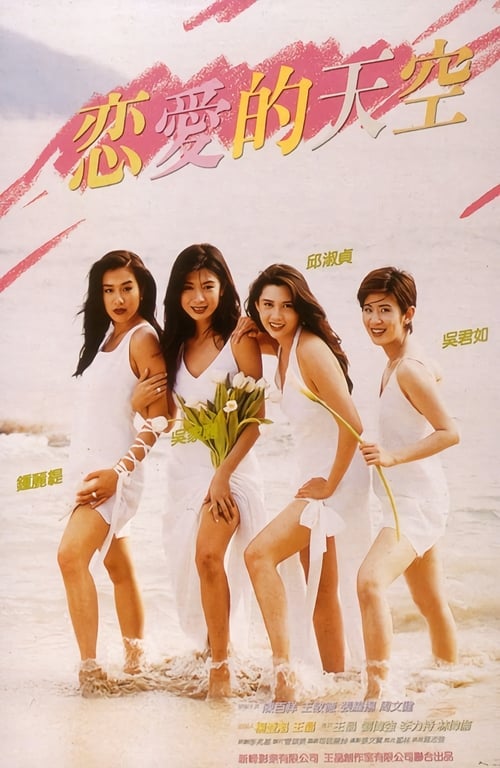
Modern Romance
Plot
Story 1: A superstitious girl who would only marry her 29th boyfriend. The 29th boyfriend is impotent. Story 2: A promisurous girl whose husband is in jail comes home one day. Story 3: A lesbian refusing to become straight Story 4: A beautiful woman who only likes men that belong to others for the challenge. Until she falls in love.
Get the Weekly Woke Watchlist
New and trending movies scored for woke bias, preachy messaging, and forced political themes — before you waste your evening.
No spam. One useful email per week.
Overall Series Review
Categorical Breakdown
The film centers on personal romantic drama and individual character quirks, not systemic oppression or racial hierarchy. The characters are judged by their actions in dating rather than immutable characteristics. There is no political lecturing on privilege or forced insertion of diversity, as the cast is ethnically authentic to the film's Hong Kong setting.
The film focuses entirely on the personal drama of dating and modern relationships. The narrative does not contain hostility toward Western civilization, nor does it demonize the home culture or ancestors. It operates in a contemporary, secular context without criticizing the foundations of its society's institutions.
The female leads are the central, complex drivers of all four stories, defining their own romantic lives entirely. One woman is promiscuous, one is highly controlling of her romantic fate through superstition, and another actively subverts traditional romance by pursuing only unavailable, attached men for the challenge. The men are often depicted as secondary figures or flawed obstacles, such as one being impotent or another being an ex-convict, which gives the women autonomous control over the gender dynamic. The narrative entirely focuses on career and individual fulfillment in romance, bypassing traditional concepts of motherhood or family.
One of the central stories explicitly focuses on a lesbian character who is actively 'refusing to become straight.' This centers alternative sexuality as a core, non-negotiable identity and a point of conflict within the narrative structure. The film dedicates a significant portion of its anthology format to highlighting a non-traditional pairing against a presumed normative structure.
The narrative operates in a secular or superstitious domain, exemplified by the girl who will only marry her 29th boyfriend based on arbitrary signs and numbers. There is an embrace of moral relativism in the promiscuous and boundary-crossing romantic choices of the characters. However, there is no direct hostility toward traditional religion, Christianity, or any explicit demonization of faith-based characters.
Get the Weekly Woke Watchlist
New and trending movies scored for woke bias, preachy messaging, and forced political themes — before you waste your evening.
No spam. One useful email per week.