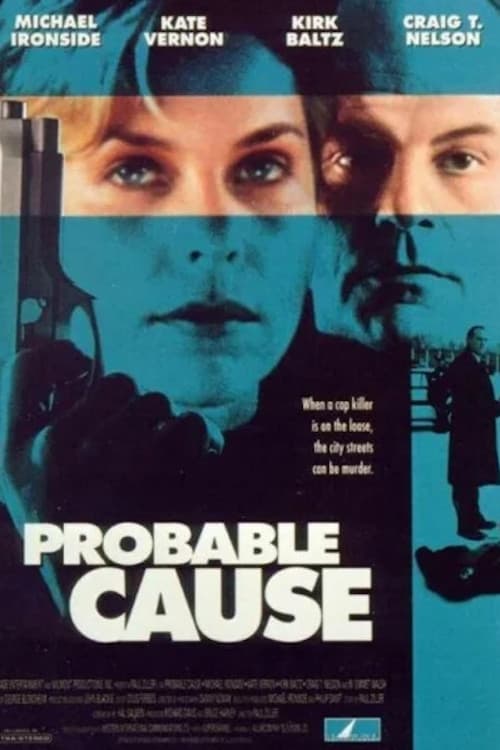
Probable Cause
Plot
A series of cop murders plagues the city. The remaining officers on the force are increasingly worried as the deaths increase with no leads. As the department's finest must solve the case before the killer strikes again.
Get the Weekly Woke Watchlist
New and trending movies scored for woke bias, preachy messaging, and forced political themes — before you waste your evening.
No spam. One useful email per week.
Overall Series Review
Categorical Breakdown
The narrative is built entirely around gender, a key immutable characteristic, and an explicit power hierarchy. The male police officers who are killed are revealed to be universally toxic, corrupt, and predatory, culminating in a gang-assault. The female protagonist is introduced as a superior performer who is victimized by the system and then acts as its violent, unconscious rectifier. The male lead is also under a sexual harassment investigation, framing white male authority as inherently questionable.
The core conflict is an indictment of the police force, a foundational civil institution responsible for justice. The narrative frames this institution as fundamentally corrupt, harboring violent sexual predators within its ranks, which deconstructs the idea of law and order as a protective shield. The story's central crime is cops killing cops, with the victims being the corrupt members of the institution.
The female lead is presented as professionally superior to her male counterparts, having excelled during her academy training. The men who resented her competence and subsequently assaulted her are revealed to be morally repugnant and ultimately meet a violent end at her hands, fulfilling a strong 'avenging woman' trope that justifies violence as a response to male toxicity and power. The primary male protagonist is also tarnished by a sexual harassment investigation.
The plot remains focused on conventional male-female sexual and power dynamics. There is no discernible presence of alternative sexual ideologies, deconstruction of the nuclear family, or explicit gender theory lecturing.
The film operates within the realm of a crime/psychological thriller. The plot does not contain direct criticism of traditional religion. However, the central character's extra-judicial pursuit of justice through murder suggests a morality that is self-determined and supersedes objective legal or higher moral frameworks.
Get the Weekly Woke Watchlist
New and trending movies scored for woke bias, preachy messaging, and forced political themes — before you waste your evening.
No spam. One useful email per week.