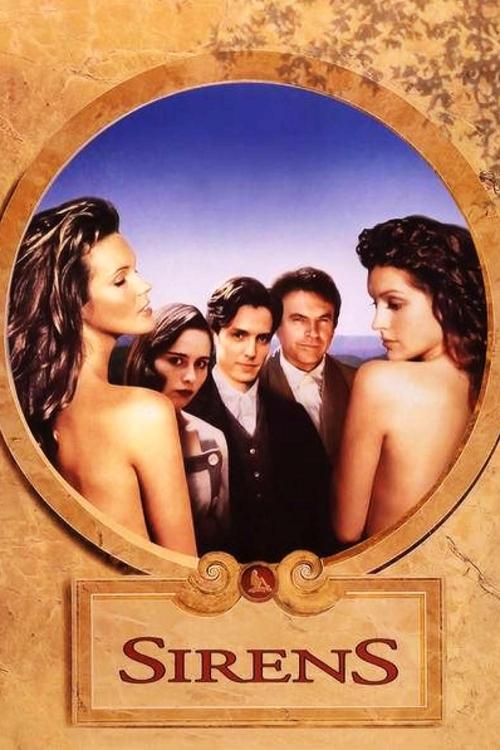
Sirens
Plot
In 1930s Australia, Anglican clergyman Anthony Campion and his prim wife, Estella, are asked to visit noted painter Norman Lindsay, whose planned contribution to an international art exhibit is considered blasphemous. While Campion and Lindsay debate, Estella finds herself drawn to the three beautiful models sitting for the painter's current work, freethinking Sheela, sensual Pru and virginal Giddy.
Get the Weekly Woke Watchlist
New and trending movies scored for woke bias, preachy messaging, and forced political themes — before you waste your evening.
No spam. One useful email per week.
Overall Series Review
Categorical Breakdown
The central conflict revolves around opposing philosophies of art, morality, and sexuality, not immutable characteristics. Characters are defined by their religious or bohemian worldviews. Casting is authentic to the 1930s Australian setting with no race-swapping or narrative focus on intersectional hierarchy.
The film criticizes the traditional Western institutions of the Anglican Church and its associated prim morality, framing them as repressive and life-denying. The narrative elevates the Australian bohemian counter-culture, with its pagan-like sensuality, as spiritually and morally superior to the stifling societal conventions of the British visitors.
The female lead's entire arc is a 'sensual awakening' facilitated by free-thinking women, championing female sexual autonomy and self-discovery. Her husband is initially repressed and awkward but is ultimately depicted as a supportive partner, not a toxic male villain. The film ends with a strengthened, more passionate marital unit, not a total rejection of the nuclear family or a focus on career over all else.
Sexuality and sensuality are central, but the focus is overwhelmingly on heterosexual dynamics—the female lead's fulfillment within her marriage and her brief sensual temptations outside it. There is no political centering of alternative sexual identities, gender ideology, or deconstruction of the nuclear family as a social construct.
Traditional religion, specifically Christianity, is positioned as the principal source of repression and censorship in the narrative. The religious character is portrayed as naive and only finds fulfillment by abandoning his rigidity and embracing the secular, sensual philosophy. The film endorses the artist’s 'Crucified Venus' and the pagan-tinged sensuality over the objective moral law of the Church.
Get the Weekly Woke Watchlist
New and trending movies scored for woke bias, preachy messaging, and forced political themes — before you waste your evening.
No spam. One useful email per week.