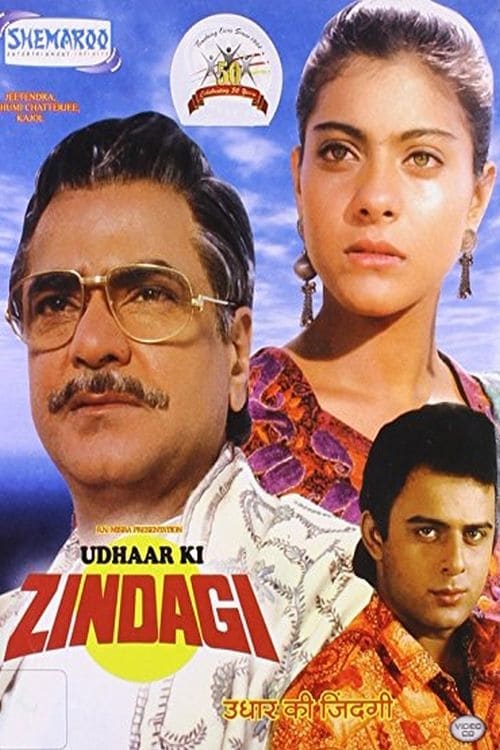
Udhaar Ki Zindagi
Plot
The film is a remake of the Telugu movie Seetharamaiah Gari Manavaralu (1991). This was Kajol's first author-backed role, which was critically acclaimed
Get the Weekly Woke Watchlist
New and trending movies scored for woke bias, preachy messaging, and forced political themes — before you waste your evening.
No spam. One useful email per week.
Overall Series Review
Categorical Breakdown
The narrative is driven by an interpersonal family conflict (love marriage vs. arranged marriage and a father's pride), not by immutable characteristics or racial grievance. The main character, a person of Indian origin raised in the US, returns to and champions the home culture's values, directly contradicting the vilification of a majority culture or forced diversity lectures. Characters are judged purely on their moral choices and emotional integrity, aligning with universal meritocracy.
The central conflict pits the patriarch's personal rigidity against the value of family, but the film ultimately celebrates and affirms the core home culture. The foreign-returned granddaughter is explicitly shown embracing the ancestral home, tradition, and rituals, implicitly positioning the home culture as spiritually superior to the Western culture of her upbringing. The story respects and prioritizes the continuation and healing of the family and ancestral lineage.
The female lead is a figure of strength and emotional resilience whose main mission is to protect and heal the nuclear family. Her vitality is defined by her devotion to family duty and reconciliation, not by a career or anti-natalist messaging. The story celebrates the role of the devoted grandmother and the nurturing, protective quality of the granddaughter's love. The male figure's primary flaw is his stubborn pride, which the female character's love and determination help to correct, promoting a complementary dynamic rather than the emasculation of men.
The plot is strictly a heterosexual, nuclear family drama centered on a rift caused by a traditional arranged marriage system being challenged by a love marriage. There is no presence of alternative sexual identities, queer theory, or any content that deconstructs the traditional male-female pairing or the nuclear family structure. The family unit is presented as the normative structure to be preserved and healed.
The film operates entirely within a traditional, culturally Hindu framework where family life is deeply interwoven with duty and ritual. Moral law is treated as objective, based on duty, forgiveness, and love, which the characters ultimately adhere to. There is no critique, hostility, or vilification of traditional religion, and faith is presented as a neutral or positive source of moral strength and cultural grounding.
Get the Weekly Woke Watchlist
New and trending movies scored for woke bias, preachy messaging, and forced political themes — before you waste your evening.
No spam. One useful email per week.