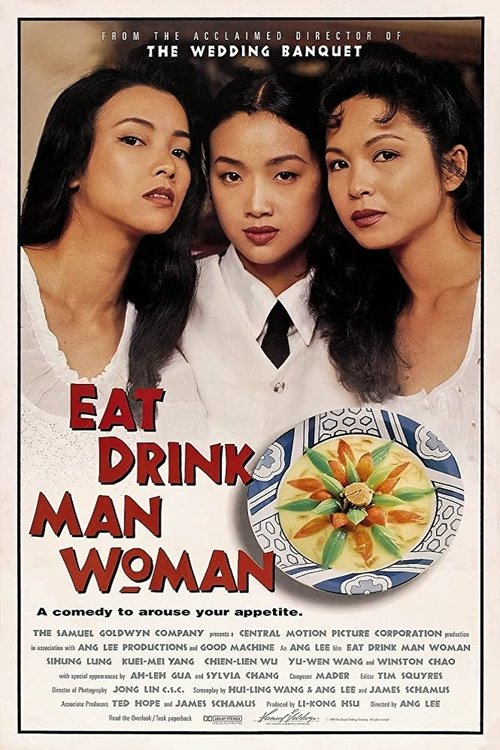
Eat Drink Man Woman
Plot
Retired and widowed Chinese master chef Chu lives in modern day Taipei, with his three attractive daughters, all of whom are unattached. Soon, each daughter encounters a new man in their lives. When these new relationships blossom, stereotypes are broken and the living situation within the family changes.
Get the Weekly Woke Watchlist
New and trending movies scored for woke bias, preachy messaging, and forced political themes — before you waste your evening.
No spam. One useful email per week.
Overall Series Review
Categorical Breakdown
The film focuses entirely on the internal dynamics of a Chinese family in Taiwan and the conflict between tradition and modernization. Characters are judged solely by their personal actions, careers, and desires. The casting is culturally authentic to the setting with no evidence of race-swapping or lecturing on white privilege.
The film sets up a tension between the father's cherished, classical Chinese cuisine and the daughters' modern lives and Western influences, such as fast food and apartment complexes named 'Little Paris in the East'. The traditional family structure is portrayed as stifling and unhappy, necessitating its deconstruction for the characters to find fulfillment. However, the film reverently showcases the traditional food preparation as a deeply respected art form and a manifestation of love. The cultural conflict is a theme of necessary adaptation to modernity, not a message that the home culture is fundamentally corrupt.
The three daughters actively rebel against their expected domestic roles and pursue professional careers and romantic relationships on their own terms. One daughter is a high-level corporate executive, and the sisters defy their father's wishes to find independence, which aligns with modern female autonomy. However, the main plot driver for all three is the pursuit of genuine male-female pairings, marriage, and forming a new family structure, which is not an anti-natalist or anti-male message. The male characters, including the master chef father, are complex figures with their own desires, not simply bumbling idiots.
The narrative centers exclusively on the heterosexual romantic and familial relationships of the father and his three daughters. There is no presence of alternative sexual identities, queer theory, or promotion of gender ideology in the plot structure.
One of the daughters becomes a Christian, and her faith is presented as part of her personal journey and internal struggle, not as a source of bigotry or evil. The main philosophical tension of the film is between modern individual desires and traditional Confucian ideals, not a critique of theism or Christianity specifically.
Get the Weekly Woke Watchlist
New and trending movies scored for woke bias, preachy messaging, and forced political themes — before you waste your evening.
No spam. One useful email per week.