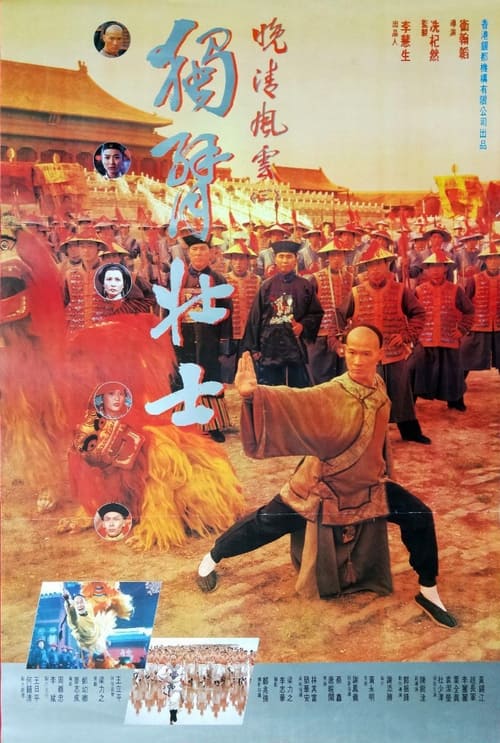
One Arm Hero
Plot
In the third and Final film of the Exiting Martial Arts Trilogy, Sam the Iron Bridge is now Governor of Canton.
Get the Weekly Woke Watchlist
New and trending movies scored for woke bias, preachy messaging, and forced political themes — before you waste your evening.
No spam. One useful email per week.
Overall Series Review
Categorical Breakdown
The hero, Sam the Iron Bridge, is judged and elevated to the position of Governor based entirely on his character and demonstrated martial arts merit. The conflict is between Chinese heroes and foreign/pirate antagonists, which is a nationalistic conflict, not a lecture on intersectional hierarchy or privilege.
The central plot is the hero taking on the role of Governor to actively defend his home city of Canton from foreign and pirate invaders. The narrative celebrates and promotes the defense of the local civilization and its institutions, placing high value on national and local identity.
Female characters, such as the recurring Aunt Hung, are present as capable martial artists who operate alongside the male hero. The focus remains on the male hero’s journey, but there is no depiction of males being emasculated and no anti-family or anti-natal messaging is apparent in the film's martial arts framework.
As a classic 1990s Hong Kong martial arts film, there is no evidence of alternative sexual ideology or gender theory. The narrative structure is normative, focusing on traditional martial arts themes, duty, and the established male-female pairing roles typical of the genre.
The movie operates within a traditional martial arts morality, where the hero is a moral exemplar fighting against corrupt or evil forces (pirates, foreigners, a 'cult' in the preceding films). The narrative firmly establishes a clear and objective moral law without embracing moral relativism or hostility toward transcendent values.
Get the Weekly Woke Watchlist
New and trending movies scored for woke bias, preachy messaging, and forced political themes — before you waste your evening.
No spam. One useful email per week.