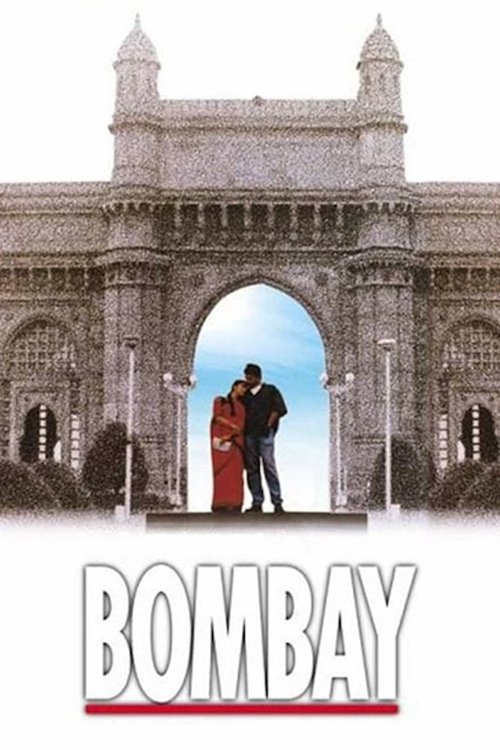
Bombay
Plot
A Hindu man and a Muslim woman fall in love in a small village and move to Mumbai, where they have two children. However, growing religious tensions and erupting riots threaten to tear the family apart.
Get the Weekly Woke Watchlist
New and trending movies scored for woke bias, preachy messaging, and forced political themes — before you waste your evening.
No spam. One useful email per week.
Overall Series Review
Categorical Breakdown
The entire plot and conflict are driven by the immutable characteristic of religious identity, measuring how Hindu and Muslim identities clash in society. Critics suggest the film’s portrayal of the riots subtly reinforces negative stereotypes of one community, presenting a vision of secularism that is skewed toward the majority identity. The hero and heroine's love is judged not by the content of their souls but by their respective communal backgrounds.
The traditional, ancestral home and family institutions in the village are depicted as fundamentally corrupt due to their religious intolerance and patriarchy, which attempts to crush the protagonists' love. The parents are the initial obstacles, and the larger civilizational structure of organized religion is shown as the source of societal chaos in the city. The film promotes a new, modern, secular Indian identity in a cosmopolitan city over the rigid, traditional heritage.
The female protagonist defies her conservative father and family to pursue the man she loves, representing a strong-willed assertion of personal choice over tradition. She is not a career-focused 'Girl Boss'; instead, the narrative dedicates a large portion to celebrating her idyllic life as a wife and a mother to twin sons. Masculinity is protective, and motherhood is affirmed as a source of fulfillment.
The narrative's focus is exclusively on the struggle of a traditional male-female romantic and marital pairing. The nuclear family unit, once established, is the moral center of the film that is directly attacked by the riots. There are no elements of alternative sexualities, deconstruction of the nuclear family outside the inter-faith context, or gender ideology lecturing present.
The most significant conflict in the movie is caused by religious fundamentalism, which is directly responsible for the massive, senseless death and destruction of the riots. Organized religion is framed as the root of the evil that destroys families and society. The only source of transcendent good is human love and secular unity, which must supersede or abandon traditional faith to survive.
Get the Weekly Woke Watchlist
New and trending movies scored for woke bias, preachy messaging, and forced political themes — before you waste your evening.
No spam. One useful email per week.