Casper
Plot
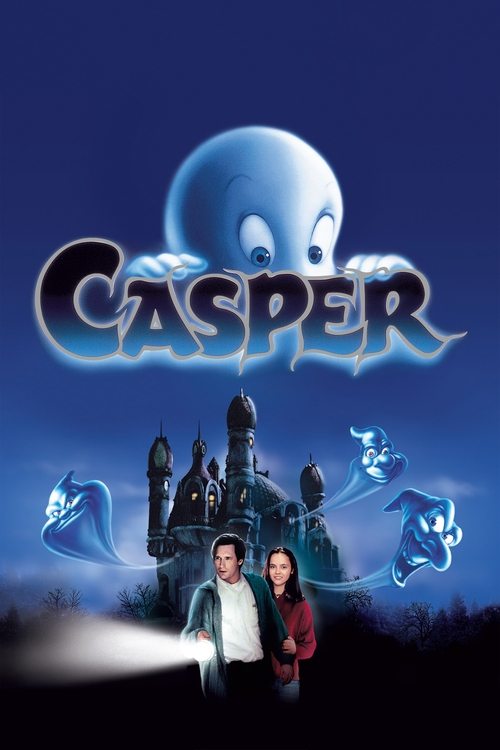
Casper is a kind young ghost who peacefully haunts a mansion in Maine. When specialist James Harvey arrives to communicate with Casper and his fellow spirits, he brings along his teenage daughter, Kat. Casper quickly falls in love with Kat, but their budding relationship is complicated not only by his transparent state, but also by his troublemaking apparition uncles and their mischievous antics.
Get the Weekly Woke Watchlist
New and trending movies scored for woke bias, preachy messaging, and forced political themes — before you waste your evening.
No spam. One useful email per week.
Overall Series Review
Categorical Breakdown
The casting is entirely unremarkable, featuring a predominantly white main cast without any indication of forced diversity or race-swapping. The plot is driven by character-specific greed, grief, and love, not by race or immutable characteristics. Character virtue, such as Casper's kindness and Dr. Harvey's parental love, determines their worth, while greed defines the villains, regardless of their background.
The film takes place in Whipstaff Manor, an old New England estate. The structure of the home is respected as a part of Casper's personal history, and Kat works to restore a sense of home within it. The character who attempts to destroy the manor is the antagonist, Carrigan Crittenden. The film does not demonize American or Western heritage; instead, it honors the legacy and memory of the house's past owner.
Kat is a capable and intelligent female protagonist who is central to the plot. She is not a perfect 'Mary Sue' but a lonely, grieving teenager working through emotional issues with her father. The main villain, Carrigan, is a bumbling, spoiled heiress who is punished for her greed, directly undercutting the 'perfect female lead' trope. The father, Dr. Harvey, is portrayed as a loving but emotionally incompetent widower whose focus on his deceased wife is shown as a vulnerability, not 'toxic masculinity.' The main romantic arc is a traditional, sweet connection where male and female roles are complementary.
The narrative adheres to a normative structure. The central romance is a classic male-female pairing between Kat and Casper. The nuclear family unit, though broken by death, is the emotional core of the film, and its restoration is the central emotional goal. There are no elements of alternative sexualities, gender ideology, or deconstruction of the family unit present in the story.
The film explicitly validates the concept of a moral afterlife where character is judged, reinforcing a transcendent moral law. Casper's mother figure, Amelia, is rewarded for her kindness with an angelic visitation, and the villain, Carrigan, is punished for her evil by being sent to the afterlife forever. The concept of objective virtue (kindness, sacrifice) and vice (greed, cruelty) is the engine of the entire climax. A comical exorcist cameo is included, but it does not serve to invalidate faith itself, only the profession of 'ghost busting' a secular pursuit.
Get the Weekly Woke Watchlist
New and trending movies scored for woke bias, preachy messaging, and forced political themes — before you waste your evening.
No spam. One useful email per week.