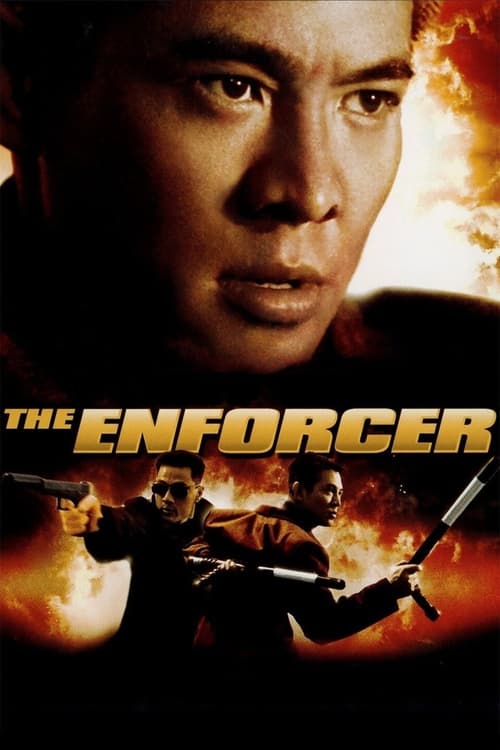
The Enforcer
Plot
An undercover cop struggling to provide for his son and ailing wife, must infiltrate a ruthless gang. But things turn sour when another cop blows his cover and he quickly finds himself battling for his life and the lives of his family.
Get the Weekly Woke Watchlist
New and trending movies scored for woke bias, preachy messaging, and forced political themes — before you waste your evening.
No spam. One useful email per week.
Overall Series Review
Categorical Breakdown
The narrative's focus is on character competence, paternal sacrifice, and the fight against organized crime. All main characters are ethnically Chinese, and the conflict does not revolve around race, 'whiteness' as a subject of vilification, or any form of intersectional hierarchy. Heroes and villains are defined by their moral choices, not their immutable characteristics. The casting is authentic to the Hong Kong/Mainland China setting.
The film does not engage in civilizational self-hatred. It is a Hong Kong production whose hero is a dedicated police officer from the Mainland, and the conflict centers on preserving justice and family honor. The main character's sacrifices for his family and the police force are celebrated, viewing institutions and protective roles as positive forces against chaos. There is no deconstruction of heritage or a 'Noble Savage' trope.
Inspector Fong is a highly capable and 'brazen' policewoman who takes the initiative in the investigation and provides protection for the child. She is portrayed as equal in professional competence to her male counterparts, which aligns with the 'Girl Boss' aspect of the spectrum. However, she is a co-protagonist, not a 'Mary Sue' who instantly overshadows everyone, and the male lead is celebrated for his protective masculinity and dedication as a father. The central theme celebrates the family unit, balancing female competence with a traditional celebration of paternal and familial duty.
The movie adheres to a normative structure, with the story's emotional core rooted in the traditional nuclear family (father, son, late mother). There is no presence of alternative sexual ideologies, centering of LGBTQ+ characters, or thematic exploration/lecturing on gender theory or the deconstruction of the nuclear family. Sexuality is not a plot point or a subject of commentary.
As a Hong Kong action film, the narrative is secular and focuses on human drama. It does not contain any explicit hostility toward religion, especially Christianity. The morality driving the plot is clear-cut: good versus evil, with the hero making significant personal sacrifices to uphold an objective moral law (justice/duty/family honor). The villain represents moral vacuum and ruthlessness, suggesting a transcendent morality, which places the score on the lower end, though the absence of faith as a specific source of strength prevents a perfect score of 1.
Get the Weekly Woke Watchlist
New and trending movies scored for woke bias, preachy messaging, and forced political themes — before you waste your evening.
No spam. One useful email per week.