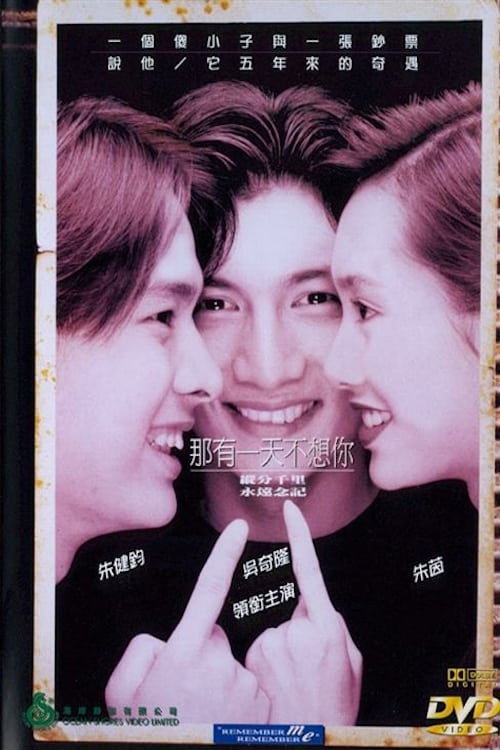
Remember M, Remember E
Plot
Chu (Mickey Chu Kin-Kwan) is a young fellow who's made it big in the business world, and makes headlines when he offers a large reward for a special $1000 bill with a personal inscription on it. The bill is a memento of his adolescent friendship with Ching (Athena Chu) and Ricky (Nicky Wu), who were once the best of friends. The three have since gone their separate ways, but Chu holds onto the bittersweet memories of their youth, when the three were inseparable, and saw only bright futures ahead of them. But misplaced emotions and the painful trials of youth split them apart, and now that Chu has finally made it big, he wants nothing more than to see the three reunited. Will the two respond to his impassioned plea to find them once again?
Get the Weekly Woke Watchlist
New and trending movies scored for woke bias, preachy messaging, and forced political themes — before you waste your evening.
No spam. One useful email per week.
Overall Series Review
Categorical Breakdown
Characters are judged by their personal struggles, ambition, and emotional maturity. The central conflicts involve tyrannical fathers and the challenges of achieving business success or a career in modeling. Race and immutable characteristics are not a factor in the plot, which is entirely set within an East Asian cultural context.
The film is an East Asian production focused on personal and familial drama in Hong Kong and Taiwan. The narrative does not criticize or show hostility toward Western civilization, one's home culture, or ancestors. The themes of filial piety and the desire for material success reflect meritocratic values.
The female lead, Ching, has a career ambition to become an international model and lies to her mother to pursue this goal, showing agency. This is a personal flaw, not a 'Girl Boss' trope. The male leads are depicted with complexity, including a successful businessman and another with a tyrannical father, preventing a general emasculation of male characters. Motherhood is not explicitly condemned or celebrated.
The core of the movie is a traditional, heterosexual friendship-love triangle and a focus on nuclear family dynamics, such as the relationship between Ricky and his father. The narrative does not center alternative sexualities, deconstruct the family unit, or promote gender ideology.
The plot is entirely secular, revolving around friendship, ambition, and memory. There is no hostility toward religion, nor are religious figures or themes present. The characters' motivations stem from personal emotional attachment and universal moral principles like loyalty, not subjective moral relativism.
Get the Weekly Woke Watchlist
New and trending movies scored for woke bias, preachy messaging, and forced political themes — before you waste your evening.
No spam. One useful email per week.