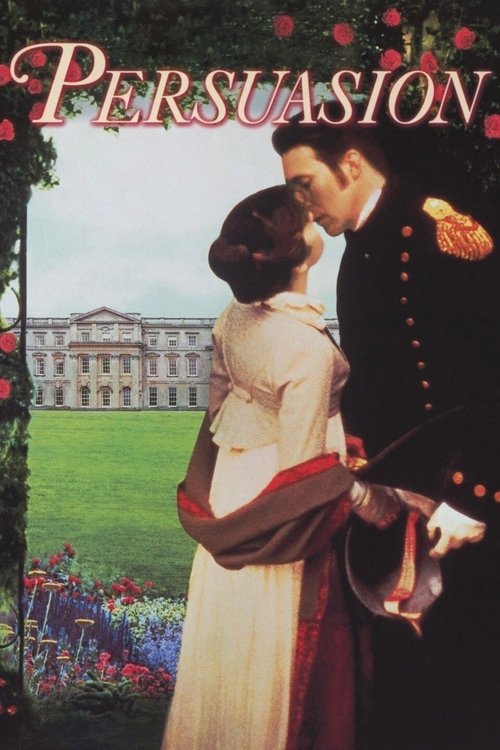
Persuasion
Plot
Living with her snobby family on the brink of bankruptcy, Anne Elliot is an unconforming woman with modern sensibilities. When Frederick Wentworth – the dashing one she once sent away – crashes back into her life, Anne must choose between putting the past behind her or listening to her heart when it comes to second chances.
Get the Weekly Woke Watchlist
New and trending movies scored for woke bias, preachy messaging, and forced political themes — before you waste your evening.
No spam. One useful email per week.
Overall Series Review
Categorical Breakdown
The narrative foundation is a critique of the old, class-based hierarchy where Anne is judged by her family's rank and her suitor is initially rejected for his lack of fortune, favoring a meritocracy exemplified by the successful Captain Wentworth. Characters are primarily judged by their personal vanity, folly, or integrity, not by immutable characteristics. A few minor background characters are noted as being non-white in service roles, which is a subtle artistic choice that alludes to colonial wealth but does not affect the central plot or character merit.
The film criticizes a specific segment of English society: the decadent, bankrupt, and vainglorious aristocracy represented by Anne’s father, Sir Walter Elliot. This is not a broad attack on Western or English culture itself, but a critique of a corrupt social order giving way to a new, meritocratic one (the Navy/professional class). The story ultimately ends with a celebration of a functional, loving partnership within the existing culture.
The film's protagonist, Anne Elliot, is framed as a quiet, sensible woman who struggles under societal constraints and her manipulative family. The narrative praises her character, intelligence, and eventual decision to choose love and a self-made man over societal expectations, asserting her autonomy in marriage. The score is moderate because it highlights a proto-feminist critique of gender roles from a historical perspective, including a scene where Anne discusses how men wrote the songs that mock women’s fickleness. However, the resolution is a traditional, deeply romantic marriage, and the male lead is a strong, highly competent naval officer who is never emasculated.
The narrative is a traditional, heterosexual romance that focuses exclusively on male-female relationships and the conventional nuclear family structure of the period. There is no presence of alternative sexual ideologies, centering of non-normative sexualities, or commentary on gender theory.
Religion and faith are virtually absent as major themes or objects of critique. The moral framework is one of personal honor, integrity, and emotional constancy, which are implicitly transcendent values, not subjective 'power dynamics.' The focus is entirely on social and romantic obstacles.
Get the Weekly Woke Watchlist
New and trending movies scored for woke bias, preachy messaging, and forced political themes — before you waste your evening.
No spam. One useful email per week.