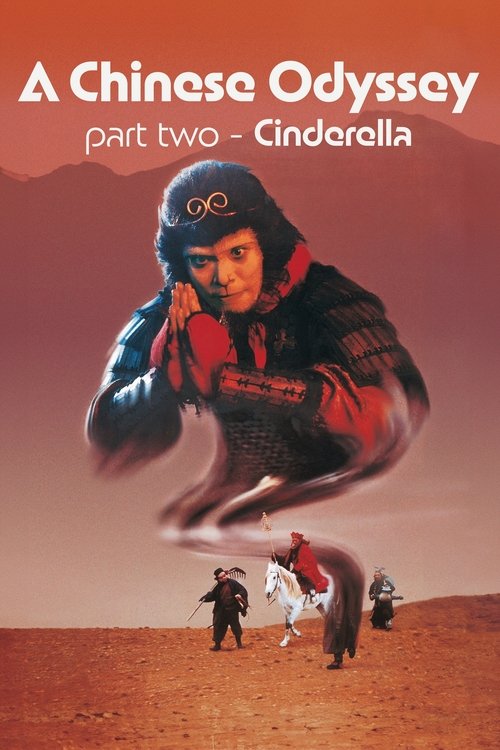
A Chinese Odyssey Part Two: Cinderella
Plot
This sequel to "Pandora's Box" continues director Jeffrey Lau's adaptation of the Buddhism saga "Journey to the West". Stranded five centuries in the past, Joker Monkey King must battle a variety of monsters, seductive women and super-powered villains to save the dying Pak Jing-Jing.
Get the Weekly Woke Watchlist
New and trending movies scored for woke bias, preachy messaging, and forced political themes — before you waste your evening.
No spam. One useful email per week.
Overall Series Review
Categorical Breakdown
The film is a Chinese production based on a foundational Chinese mythological text, featuring an entirely Chinese cast. The central conflict is about a character’s merit, love, and destiny, not race, class, or immutable characteristics. Casting is culturally authentic to the source material. The narrative avoids all themes of intersectional hierarchy or systemic oppression.
The movie is an adaptation and affectionate, if irreverent, parody of one of the most important classics of Chinese literature, Journey to the West. The hero’s arc culminates in the acceptance of his destined role, honoring a core mythological and cultural lineage. There is no hostility toward the home culture or vilification of ancestors; the film proudly engages with and reinterprets its national heritage.
Female characters like Zixia Fairy are powerful, proactive immortal beings who initiate the romantic conflict and drive major plot points. Their power, however, is channeled through their desire to find their fated male partner. The tragic resolution centers on the man's sacrifice of romantic love to accept his heroic/protective destiny, maintaining a distinct but complementary dynamic between the sexes rather than promoting a 'Girl Boss' trope or emasculating the protagonist.
The narrative's core is a heterosexual, fated love story involving the protagonist, Zixia Fairy, and the Demon Bull King's sister-in-law. The film is entirely focused on traditional male-female romantic and mythological pairings. There is no presence, centering, or discussion of alternative sexualities, gender ideology, or deconstruction of the nuclear family.
The entire story is a re-imagining of a Buddhist epic and centers on the protagonist accepting his celestial, destiny-driven path as a protector of the Longevity Monk. While the Monk himself is played for comedic effect, the divine authority (Guanyin, the mandate of heaven) and the spiritual journey are treated as the objective, transcendent truth the hero must accept. Faith and destiny are presented as the source of strength and ultimate meaning.
Get the Weekly Woke Watchlist
New and trending movies scored for woke bias, preachy messaging, and forced political themes — before you waste your evening.
No spam. One useful email per week.