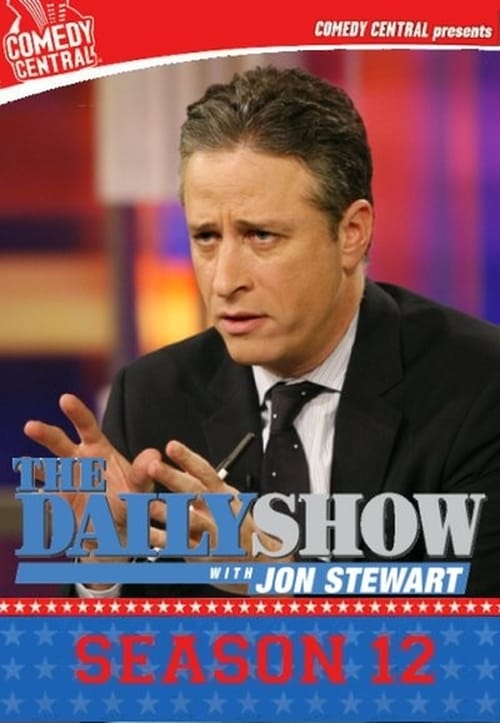
The Daily Show
Season 12 Analysis
Season Overview
No specific overview for this season.
Season Review
Categorical Breakdown
The narrative frequently frames political issues like the Iraq War and poverty through a lens of privilege and systemic critique, particularly when discussing race-related political gaffes or policies that disproportionately affect minorities. While the plot does not exclusively exist to 'lecture on privilege,' the show consistently employs progressive political framings to criticize opponents, often depicting conservative white male authority figures (politicians, pundits) as incompetent or misguided targets of the satire.
The central focus of the satire is the systematic failure of American political institutions and media, particularly in relation to the Iraq War and Washington's political gridlock. American culture and government are frequently framed as fundamentally broken and dishonest. The show's criticism is not aimed at respecting the sacrifices of ancestors but rather at deconstructing modern American political heritage and exposing hypocrisy in institutional power structures.
Gender is a secondary theme to political critique, but the show employs a progressive stance on social issues. Female correspondents and guests are portrayed as intelligent and rational, often serving as straight-wo/men to expose the absurdity of male political figures and media pundits. The show does not feature explicit anti-natalism, but it consistently champions a general liberal-feminist perspective by satirizing the traditional and conservative positions on women's roles and political power.
In the 2007 context, the show strongly championed the cause of gay rights and equality. Political opposition to same-sex marriage and other related civil rights is routinely satirized and framed as unwarranted bigotry. The consistent positioning of traditional marriage as an 'oppressive' or 'irrational' structure in political discourse aligns with centering alternative sexualities as a fundamental political good that must overcome bigoted opposition.
The show is extremely hostile toward the political and cultural influence of organized religion, specifically Christianity in American public life. Christian characters and figures who mix faith with politics (e.g., televangelists, Religious Right politicians) are consistently depicted as hypocritical, irrational, and bigoted villains. The season featured an interview with Christopher Hitchens, whose book argued that religion 'poisons everything,' underscoring the show's endorsement of a secular, rationalist, and moral relativist viewpoint that views faith as a political liability.