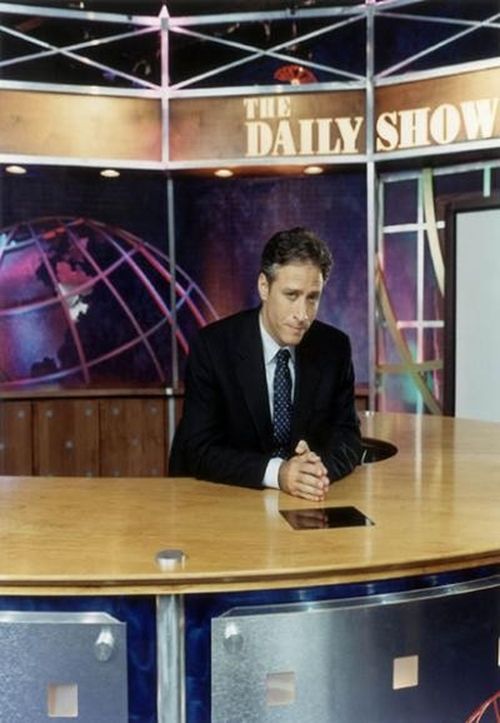
The Daily Show
Season 13 Analysis
Season Overview
No specific overview for this season.
Season Review
Categorical Breakdown
The narrative frequently highlights the race and gender of political candidates like Barack Obama and Hillary Clinton, primarily to expose the media's superficial or biased coverage of them. There is clear support for the idea that immutable characteristics were politically marginalized, placing identity-based grievance near the center of political commentary. The satire rarely vilifies 'whiteness' as a general category but routinely ridicules white male figures in power (politicians, media personalities) as incompetent, dishonest, or out of touch.
The show adopts a highly cynical stance toward almost all major American institutions—the Presidency, Congress, and especially the media—framing them as fundamentally broken, corrupt, or willfully ignorant. This is less a call for civilizational self-hatred and more a relentless deconstruction of contemporary American political structures. Segments like 'Mess O' Potamia' portray American foreign policy and government leadership as deeply flawed and destructive, reflecting a strong sense of national disappointment and institutional betrayal.
The political gender dynamics of the 2008 election, particularly surrounding Hillary Clinton and Sarah Palin, are a constant focus. The show highlights and satirizes sexist coverage, implicitly advocating for gender equality in politics. While it supports female political advancement, it stops short of depicting characters with the modern 'Girl Boss' trope of instant, flawless perfection, instead satirizing them as ambitious, human politicians. There is no explicit anti-natalist messaging, but the focus is entirely on the political career path.
The program consistently champions the cause of same-sex marriage, which was the dominant LGBTQ+ political issue in 2008. Conservative opposition to marriage equality is depicted as irrational, antiquated, or bigoted. The show promotes alternative sexuality as a public norm requiring legal recognition, directly challenging traditional norms of marriage and family structure. The themes do not yet extensively cover gender ideology or the 'Queer Theory' focus on gender fluidity, keeping the score in the mid-range of sexual ideology integration.
Conservative Christianity, especially the 'Religious Right' and its involvement in politics, is a frequent and primary object of ridicule. Traditional religious morality is consistently framed as the basis for bigoted or ignorant political positions, particularly on social issues like same-sex marriage. The commentary implicitly favors a secular, subjective morality over one based on objective, transcendent law, giving faith a role only when it aligns with political progressivism. Christian political figures are often portrayed as the villains or the punchline.